

In CNC machining, choosing the right milling technique can make all the difference.
From the precision needed for intricate parts to production efficiency, milling is a key process in manufacturing.
CNC milling uses a rotating tool to cut away material, shaping complex parts with high accuracy.
But with this versatility comes the crucial choice between climb milling and conventional milling.
So, why is this choice so significant?
Each approach affects surface finish, tool wear, accuracy, and efficiency differently.
Knowing when to use each technique helps machinists achieve optimal results, from smooth finishes on softer materials to controlled cuts on harder ones.
Mastering climb and conventional milling enables you to tailor your approach to each project’s needs, ensuring quality and efficiency.
What is Climb Milling?

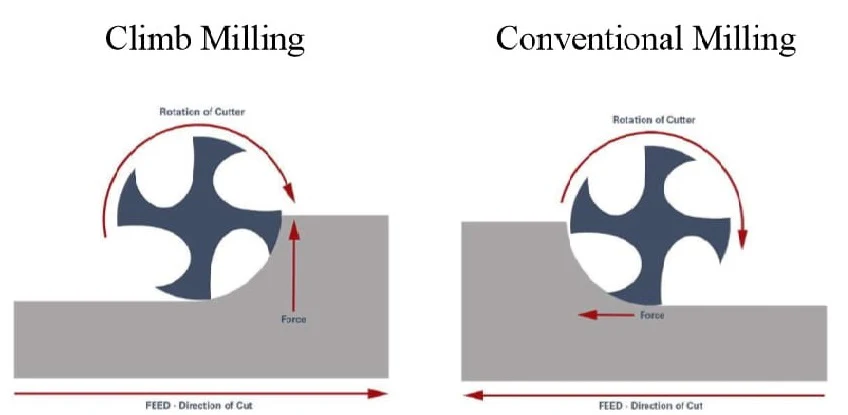
Climb milling, also known as down milling, is a milling technique where the cutter rotates in the same direction as the feed of the workpiece.
Imagine the cutter’s teeth “climbing” along the surface of the material, removing chips as it moves.
This setup minimizes the cutting load on each pass, making it an increasingly popular method for CNC milling applications.
Advantages

Smoother Surface Finish: Since the chip thickness starts at its maximum and tapers off, there’s minimal re-cutting of chips. This leads to a smoother, high-quality surface finish, ideal for parts where appearance and finish are essential.
Reduced Tool Wear: With lower cutting forces and more consistent chip formation, climb milling extends the life of cutting tools. This means less frequent tool changes and, ultimately, cost savings in production.
Lower Heat Generation: The gradual reduction in chip width allows heat to dissipate into the chip itself rather than the workpiece or tool, minimizing friction and heat buildup. This is particularly helpful in reducing thermal distortion in the workpiece and maintaining dimensional accuracy.
Disadvantages
Backlash Risks: In manual milling machines without backlash eliminators, climb milling can cause table movement due to the downward pull of the tool, known as backlash. This can result in inaccuracies and, in severe cases, can damage the cutter or workpiece.
High Vibration Potential: Climb milling can lead to chatter or vibrations, especially when used on harder materials or at high speeds. These vibrations can compromise both the surface finish and the accuracy of the part.
Best Applications for Climb Milling
Climb milling is especially effective in applications where surface finish, tool longevity, and precision are essential. Here are some ideal situations for using climb milling:
- High-Precision Machining: When dimensional accuracy is crucial, such as in aerospace and medical devices.
- Aluminum and Softer Alloys: Well-suited for materials that benefit from reduced tool wear and lower cutting forces.
- High-Quality Surface Finishes: Ideal for parts where appearance matters, as climb milling minimizes re-cutting and delivers smoother finishes.
- High-Production Environments: Perfect for scenarios where extending tool life can reduce downtime and increase efficiency.
What is Conventional Milling?

Conventional milling, also known as up milling, involves the cutter rotating against the feed direction of the workpiece.
This process allows the tool to push away from the workpiece, making it effective for certain types of materials and setups.
Advantages
- Better for Hard Materials: Conventional milling is ideal for tougher materials like steel or cast iron, as it manages the stress these materials create during cutting.
- Stability and Control: Particularly beneficial on older or manual machines, where it provides machinists with enhanced stability.
- Reduced Backlash Issues: Often preferred in manual milling setups that may struggle with climb milling’s higher backlash risks.
Disadvantages
- Poorer Surface Finish: Chip re-cutting often results in a rougher surface finish, as chips remain in the cutting path.
- Increased Tool Wear: Since the tool endures more friction and heat buildup from chip re-cutting, this method can cause faster wear on tools.
Best Applications for Conventional Milling

Conventional milling is best suited for:
- Initial Rough Passes on Hard Materials: Useful for preparing surfaces on tougher materials before the final finishing cuts.
- Workpieces with Rough or Oxidized Surfaces: Helps to reduce wear on tools by avoiding initial heavy engagement with the workpiece’s tough exterior.
- Manual Milling Setups: Ideal for machines without backlash elimination, providing greater control and safety in the operation.
Comparing Key Aspects of Climb and Conventional Milling

Quick Overview
Tool Deflection
- Climb Milling: Creates perpendicular tool deflection relative to the cut, which can affect precision. This deflection may increase or decrease the cut width, impacting dimensional accuracy.
- Conventional Milling: Aligns more with the direction of the cut, which helps control tool deflection and maintain stability. This alignment is often preferred when accuracy is critical.
Chip Formation and Ejection

- Climb Milling: Chip thickness is highest at the beginning and decreases as the cut continues, leading to efficient chip removal and reduced tool wear.
- Conventional Milling: Chips start thin and gradually increase in thickness. While this can help with certain tough materials, it often results in re-cutting chips and a rougher surface finish.
Heat Management
- Climb Milling: Known for effective heat dissipation, as the thicker chip at the start of the cut helps absorb heat and direct it away from the workpiece, especially in softer materials.
- Conventional Milling: Typically generates higher heat and more friction as chips stay longer in the cutting path. This can lead to increased tool wear, especially with harder materials.
Workpiece Stability
- Climb Milling: The downward cutting force helps secure the workpiece against the table, minimizing movement and potential chatter. This force makes it ideal for thin or delicate parts.
- Conventional Milling: Generates an upward force, which may require additional workholding to keep the workpiece stable, particularly in horizontal milling setups.
Surface Finish
- Climb Milling: Often produces a smoother surface finish because the chips are directed behind the cutter, avoiding recutting. This results in fewer imperfections on the surface, making it ideal for finishing passes.
- Conventional Milling: Tends to leave a rougher finish due to chip recutting, which can create slight imperfections. This method is more suitable for roughing passes, where precision in surface finish is less critical.
Tool Wear

- Climb Milling: With reduced tool wear, this technique lowers friction and heat generation, allowing the tool to maintain its sharpness longer. This makes climb milling efficient and cost-effective for softer materials or finishing tasks.
- Conventional Milling: Higher tool wear can be expected due to chip recutting and increased friction. This leads to faster degradation of the cutting tool, making it more suitable for harder materials or initial roughing passes.
Factors Influencing Choice Between Climb and Conventional Milling
Selecting between climb and conventional milling isn’t always straightforward, as various factors can impact which method is best suited for your project.
Here are the key elements to consider:
Material Type and Hardness

Softer materials like aluminum or plastics generally yield better results with climb milling due to their ability to produce smoother finishes.
Harder or abrasive materials like cast iron or steel are often better suited to conventional milling because they minimize tool wear and provide stability during initial roughing.
Machine Backlash and Rigidity

Manual machines or machines prone to backlash are typically better matched with conventional milling to avoid unintentional tool movement.
However, if using a CNC machine with a backlash eliminator, climb milling can be safely utilized, reaping benefits like reduced tool wear and better finishes.
Desired Surface Quality

When aiming for a finer surface finish, climb milling is the preferred choice, as it directs chips away from the cut and minimizes surface imperfections.
For rougher, initial passes or harder surfaces, conventional milling provides stability and durability, allowing for a coarser finish without compromising the tool.
Cutting Speed and Depth
Higher cutting speeds and shallow cuts generally suit climb milling, as the process generates less heat and tool wear.
For deeper cuts or when increased control is needed, conventional milling offers better manageability, ensuring precision without risking excessive tool deflection.
Advanced Tips and Best Practices

To get the best results from your milling processes, consider these advanced tips and best practices:
Use Climb Milling for Final Passes: For a high-quality finish, climb milling is often favored for the final pass. It leaves a smoother surface by minimizing chip re-cutting and is ideal for producing precision parts.
Balancing Depth of Cut and Tool Life: Setting the right depth of cut is crucial, especially in conventional milling. A balanced depth helps preserve tool life and reduces heat buildup, ensuring that tools perform efficiently for longer.
Managing Chip Load: Chip load is the amount of material each cutting edge removes with each pass. Keeping it consistent helps reduce tool deflection and enhance cutting accuracy. Adjust the feed rate and spindle speed to control chip load based on material type and desired finish.
Backlash Eliminators for Manual Machines: If you’re using an older, manual machine prone to backlash, adding a backlash eliminator can allow you to safely utilize climb milling without risking tool movement. This addition helps older machines perform more like CNCs by reducing the chance of inaccuracies caused by backlash.
Common Mistakes and Misconceptions
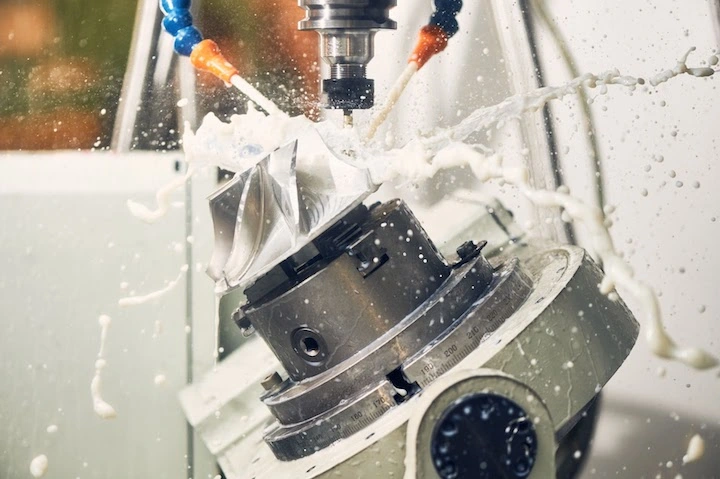
When choosing between climb and conventional milling, it’s easy to make assumptions that can impact results.
Here are some frequent mistakes and misconceptions to avoid:
Assuming Climb Milling is Always Superior
While climb milling is popular for its smoother finish and lower tool wear, it’s not always the best choice.
Conventional milling is often more effective for hard materials like cast iron and for rough or hardened surfaces, where it offers greater stability and control.
Ignoring Machine Type
Not all machines handle both methods equally.
Manual machines, especially older ones without backlash eliminators, generally perform better with conventional milling.
CNC machines, on the other hand, are well-suited to climb milling since they often have backlash compensation features.
Overlooking Material Work Hardening

Using climb milling on surfaces that tend to work harden can lead to increased tool wear or even tool damage.
For example, materials like stainless steel may cause sudden increases in chip load, which can reduce tool life and compromise accuracy if not properly managed.
Practical Applications Across Industries
Different industries utilize both climb and conventional milling techniques based on material needs, precision requirements, and durability.
Here’s how these methods are applied in various sectors:
Aerospace

Climb milling is ideal for lightweight, precision parts like aluminum airframes, where a smoother finish and lower tool wear are essential.
Conventional milling is used for tougher alloy components, offering greater stability during initial cuts.
Automotive
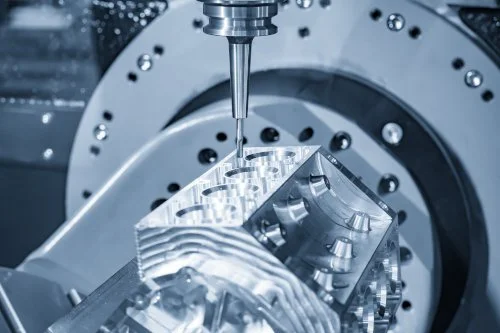
For components requiring soft materials (e.g., aluminum in engine parts), climb milling provides a finer surface finish.
Conventional milling works well with harder metals like steel, which are often used in chassis and suspension parts for added stability.
Medical Devices

Climb milling is a preferred method for biocompatible materials that require a smooth surface, such as titanium implants.
This technique ensures high precision and reduces tool wear, which is crucial for medical implants that must meet strict tolerances.
Electronics Manufacturing

Many electronic parts require precision and minimal tool wear.
Climb milling is often chosen for delicate components where maintaining accuracy and reducing surface defects are priorities, such as in the manufacture of circuit boards and connector pins.
Testing and Ensuring Quality

To achieve precision and reliability in CNC milling, it’s essential to apply quality control practices tailored to the specific needs of each milling technique.
Testing for Tool Deflection and Accuracy
Tool deflection can impact cut accuracy and surface finish.
Measurement tools like dial indicators or laser alignment systems are used to monitor and adjust for deflection, especially in climb milling, where perpendicular forces are common.
Regular testing ensures consistent quality in cuts and prevents unexpected deviations.
Adhering to Industry Standards
Following recognized standards like ISO 2768 or ISO 9001 helps maintain quality assurance and process control.
These standards outline procedures for tolerances, surface finishes, and other specifications critical in precision manufacturing, ensuring products meet industry benchmarks for safety and performance.
Tool Path Optimization with CAM Software
Computer-Aided Manufacturing (CAM) software plays a vital role in optimizing tool paths by refining the direction and depth of cuts.
CAM software manages chip load, tool engagement, and feed rate adjustments, reducing tool wear and errors during milling.
These refinements are especially beneficial in complex machining operations where precision is key, such as aerospace and medical device manufacturing.


 English
 Arabic
 German
 Spanish
 French
 Italian
 Javanese
 Korean
 Portuguese
 Russian
 Hindi
 Chinese
