

Injection molding is a cornerstone of plastic part manufacturing. All the plastic components that you see with such complicated shapes are the result of the process. The secret of its efficiency lies in a precisely engineered tool called an injection mold.
Understanding its components is like peering behind the curtain of this vital process. This article will take you into the fascinating world of injection mold components.
We’ll talk about the individual functions of these components and how they work together. By the end, you’ll have a much better understanding of the process of injection molding.
Understanding Injection Molding
Injection molding is a commonly employed manufacturing process. When we discuss creating complex plastic parts, we start by injecting molten plastic material into a hollow mold cavity. After the plastic is injected, the next step is to let it cool down.
The next step comes when the plastic cools and solidifies. It actually takes the shape of the mold. After solidification comes demolding and finishing, which are the basic things, but the process typically involves several steps: feeding plastic pellets into a heated barrel and melting them, etc.
Injection molding is suggested for mass production of identical plastic parts. These parts are with a high degree of accuracy and repeatability.
The applications of injection molding are vast. This encompasses nearly every aspect of our lives. We can spot this in the intricate components within electronic devices or structural parts in automobiles.
It is not limited to that. The process is used for countless household items like toys, bottles, and furniture components.
We can say injection molding is responsible for shaping the plastic world around us. This technique is efficient and can produce complex geometries. This fact, in particular, has made it essential for the modern manufacturing industry.

Basic Components of an Injection Mold

To this point, we have been learning about the amazing capabilities of injection molding. Moving on from that, let’s examine the precise mechanisms of the injection mold.
An injection mold is the key to all of this. A work of engineering art, an injection mold is painstakingly made of steel or aluminum. This material choice enables it to withstand the extreme pressures and temperatures involved. Below is a description of its basic elements.
Mold Base
This is the foundation of the entire mold. It is a rigid frame that holds all the other components together. You can think of it as the stage where the molding drama unfolds.
The mold base is machined with precise channels. This specification is used to allow for the circulation of coolant. Along with that, it also works in proper clamping onto the injection molding machine.
Core and Cavity

These are the two stars of the show. The cavity, which is usually the fixed half of the mold, defines the shape of the final plastic part.
The core is often the moving half, and it can create internal features or holes. Their precise alignment is crucial for creating flawless parts. You can understand them as the mold’s positive and negative imprints that work together to form the plastic.
Cooling System
Rapid cooling is essential for efficient cycle times and part quality. A network of channels machined within the mold base allows a cooling fluid, like water, to circulate. These fluid circulations remove heat from the molten plastic.
Efficient cooling ensures the plastic solidifies quickly and the mold cycles through production smoothly. This system works as the mold’s internal air conditioning, keeping things cool for optimal performance.
Ejector System
Once the plastic cools and hardens, it’s time for the part to take its final bow. The ejector system consists of pins or plates.
These are strategically placed within the mold and push the finished part out of the cavity. This system can be looked at as the backstage crew. This is because it ensures a smooth exit for the newly formed plastic part.
Runner System
The molten plastic doesn’t magically teleport from the machine nozzle to the cavity. The runner system acts as a delivery network. It consists of channels within the mold that guide the molten plastic from the sprue to the cavity.
A well-designed runner system minimizes material waste and ensures proper filling of the cavity.
Sprue and Gate

The sprue is the initial point of contact where the molten plastic enters the mold from the machine nozzle. The gate is a small opening within the runner system that monitors the flow of plastic into the cavity.
These two components play a crucial role in ensuring proper filling and minimizing waste. Think of them as the entryway and doorway, welcoming the molten plastic into the mold cavity.
Advanced Components and Features
Although an injection mold’s fundamental parts serve as its framework, several sophisticated features can improve productivity and functionality. Let’s investigate a few of these developments.
Hot Runner Systems

Traditional injection molding creates waste in the form of sprues and runners. This requires removal and regrinding. Hot runner systems offer a more sustainable solution.
These systems utilize a heated manifold that keeps the plastic molten within the mold itself. The plastic is then channeled directly to each cavity through strategically placed gates. This eliminates waste and reduces cycle times.
Inserts and Overmolding
Injection molding isn’t limited to creating parts solely from plastic. Inserts, crafted from metal or other materials, can be embedded within the mold to create parts with unique properties.
Overmolding takes this a step further. This is where plastic is molded around existing components, such as electronic parts or metal structures.
It allows for the combination of different materials within a single part, offering advantages in strength, conductivity, or other desired properties.
Slide Cores and Lifters

There are some parts with complex geometries that include undercuts or internal threads. Traditional molds might struggle with part ejection. Slide cores and lifters are ingenious solutions.
The slide cores are mold components that move laterally within the mold during the opening process. Lifters, on the other hand, move vertically.
These features support the creation of features. It would be impossible to remove with a simple ejector pin system.
Mold Coatings and Surface Treatments
The surface finish of a molded part is crucial for its aesthetics. It is equally important for the part’s functionality. Mold coatings and surface treatments play a significantly important role in achieving the desired results.
Coatings like nickel or chrome can enhance wear resistance. It also improves the cosmetic appearance. Texture treatments can be applied to the mold surface to replicate specific finishes on the final part.
Mold Design Considerations for Complex Parts
We need to be aware that successfully molding intricate parts requires careful consideration. It is highly important during the design phase.
Wall thickness needs to be optimized to ensure uniform cooling and prevent warping. Gate location and size play a crucial role in achieving proper flow and minimizing stress marks.
Advanced mold design software and simulation tools can be employed to analyze potential issues and optimize mold design for complex geometries. Imagine designing a complex mold as writing a detailed script for the molding process. Every detail needs to be considered to make sure of the smooth production of the desired part.
Maintenance and Care of Injection Molds

Just like any high-performance machine, injection molds require proper care and maintenance. It supports optimal function and the production of high-quality parts. Neglecting mold maintenance can lead to a domino effect of problems.
These issues are tabulated below.
| Decreased part quality | Increased downtime | Higher replacement costs |
| Dirty or damaged molds can cause imperfections on the final parts. These imperfections can be such as surface blemishes, flash (excess plastic), or dimensional inconsistencies. | Mold failures due to wear and tear can lead to production stoppages. These impact efficiency and profitability. | Without proper care, molds can deteriorate faster. This can necessitate expensive repairs or replacements. |
Here’s how to ensure your injection molds experience a long and healthy life.
Regular Cleaning and Inspection
Molds should be thoroughly cleaned either at predetermined intervals or after every production run. This entails clearing away any leftover plastic, trash, or impurities.
Dust and other particles are frequently blasted out using compressed air. It is then followed by cleaning the mold surfaces using a solution designed specifically for mold.
Inspections on a regular basis are essential to spot possible problems early on. It makes it possible for you to identify wear, corrosion, and cracks. By identifying these issues early on, you can minimize repair costs and downtime by preparing for preventive maintenance.
Proper Lubrication
Lubricating moving parts of the mold will be necessary. Smooth operation is ensured by using the suggested lubricants at the prescribed intervals. It also prolongs the life of these essential parts.
Temperature Control
Maintaining consistent mold temperatures is essential for part quality and cycle times. Regularly monitoring and calibrating the mold’s temperature control system ensures optimal performance.
Troubleshooting Common Issues
Injection molders should be trained to identify and address common problems. These problems can be poor surface finish or burning. A preventive maintenance plan and readily available spare parts can minimize downtime when these issues arise.
Advancements in Injection Molding Technology
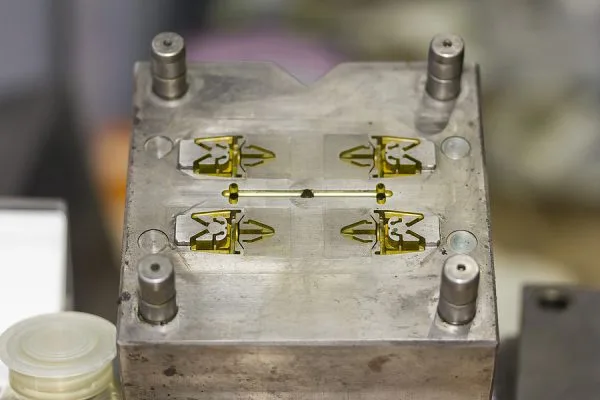
Progress is continuously being made in the field of injection molding. It is constantly evolving, with exciting advancements shaping the future of the industry. Let’s explore some of the key trends on the horizon.
Industry Advancements in Technology
Material science is innovating regularly. It offers new possibilities for injection molding. Biodegradable and bio-based plastics are gaining traction.
Advancements are currently being driven by a growing focus on sustainability. Advanced materials with unique properties, like enhanced conductivity or heat resistance, are opening doors for new applications.
Additionally, advancements in micro-molding technology are gaining traction. They are enabling the production of incredibly tiny and intricate parts. These parts cater to the miniaturization needs of various industries like electronics and medical devices.
Integration of Automation and Industry 4.0
The rise of Industry 4.0 principles is transforming injection molding into a smarter and more efficient process. Automation is playing a key role. With robots increasingly taking over menial tasks, it is becoming more convenient.
Sensor integration allows for real-time monitoring of mold performance. This monitoring paves the way for predictive maintenance and preventing downtime.
Data analytics tools are being utilized to optimize process parameters. They also ensure consistent part quality. This integration of automation and data-driven decision-making is leading to a new era of intelligent injection molding.
Sustainable Practices and Materials in Mold Manufacturing
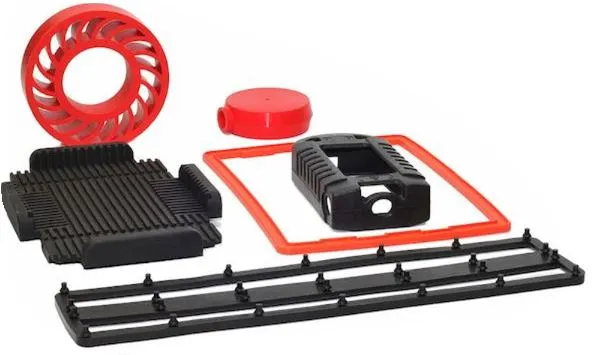
Sustainability is a major concern in the manufacturing sector. We know that injection molding is no exception.
There’s a growing focus on using recycled materials in mold making. Researchers are also exploring bio-based alternatives to traditional mold steels.
Additionally, manufacturers are optimizing mold designs to minimize waste. It also minimizes energy consumption during the molding process. These advancements are crucial for ensuring a greener future for injection molding.
Summing Up
To sum up, injection molds are technical wonders that create the plastic components that are a part of everyday life. Understanding the complex inner workings of an injection mold is essential to understanding this process. It is crucial to be aware of each component, from the fundamental parts to the more advanced features.
You need to look no further than Hi Top Industries for a dependable partner for your injection molding requirements. Their proficiency and dedication to state-of-the-art technology have equipped them to assist you in realizing your production objectives. Speak with Hi Top Industries about your project right now.
FAQs
1. What are the benefits of injection molding?
Injection molding offers you many benefits. Some can be high production rates, tight tolerances, and complex part geometries.
2. What materials are used in injection molding?
Thermoplastics like ABS and nylon are most common, but other materials include thermosets and even metals.
3. What are the limitations of injection molding?
High initial tooling costs and limitations on part size can be drawbacks.
4. How does injection mold design affect the process?
Proper design is crucial for part quality, cycle times, and material waste. Consider consulting a professional mold maker for complex parts.
Related Articles
- Medical Injection Molding: Precision in Healthcare
- Liquid Silicone Rubber Injection Molding: A Detailed Guide
- Mastering Injection Molding Tolerances: Key Insights
- Reaction Injection Molding: Process, Benefits and Uses
- Injection Molding Defects and Their Solutions
- Aluminum Injection Molding: Cost, Benefits, and Design
- ABS Injection Molding: Key Benefits, Process
- Ultimate Guide to HDPE Injection Molding
- 10 Common Plastic Resins for Injection Molding
- Injection Molding vs. Compression Molding


 English
 Arabic
 German
 Spanish
 French
 Italian
 Javanese
 Korean
 Portuguese
 Russian
 Hindi
 Chinese
