

In the quest to craft the perfect metal component, manufacturers often find themselves at a crossroads: Which is preferable: Die Casting or Metal Injection Molding? Every process has created its niche in the metalworking field by carrying its own advantages and capturing different industries. However, where details are important and the cost is high, which process determines the success of your project?
Let’s go into a clash between the titans of precision and efficiency.
Die Casting vs. Metal Injection Molding comparison:

Die Casting and Metal Injection Molding are two processes that drastically improve the productivity and accuracy of metal components manufacture, each of them designed for particular manufacturing environments and needs.
Process:
Metal injection molding (MIM) and die casting are different processes used to produce intricate metal parts. Each of the processes deals with different requirements in terms of complexity, volume, and material properties.
Metal Injection Molding Process:

- Feedstock Preparation: MIM starts with the process of blending metal powder with binders to produce feedstock. This blend is fired to cause the binders to melt and uniformly coat the metal particles.
- Molding: Like plastic molding, this step involves forming the molten blend into portions which are called green parts.
- Debinding: In this case, most binders are removed, usually by solvent extraction, leaving some parts porous.
- Sintering: The final step is to heat the parts in a furnace, during which the metal particles get fused together to form a dense solid mass.
Die Casting Process:
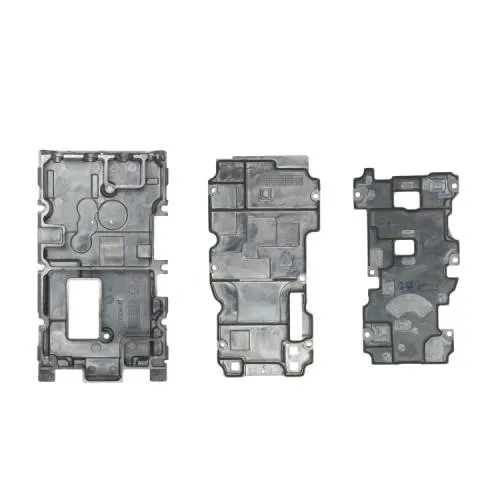
- Preparing Mold: A precision machinery is used to fabricate a steel mold which can withstand high temperatures and high pressures.
- Clamping: The die is washed, lubricated, and clamped under high pressure for Casting.
- Casting: The die is filled with liquid metal by injecting the molten metal with either a hot or cold chamber method.
- Cooling: The metal is then cooled down and becomes solid in the mold, and retains the final shape.
- Ejection: The solid pieces of metal are ejected out of the die by a pushing mechanism once they fully solidify.
- Trimming: The excess metal is cut off, and the final part is formed.
MIM is an appropriate technology for manufacturing small components that are difficult and require precision, and it enables the usage of a wider array of materials, such as ferrous metals. It is faster and more cost-efficient as an alternative for high volume production of larger parts for non-ferrous metals such as zinc and aluminum. However, MIM consists of many post-processing stages, which may increase the cost but provide more design freedom and materials properties. Die Casting, being less versatile in materials and complexity, provides faster turnaround and greater productivity for high-volume runs.
Both processes offer high-quality parts; the decision as to which one to use depends on the particular characteristics of the project, such as part size, complexity, material, and production volume.
Advantages and Disadvantages:
Die casting and metal injection molding are chosen based on project needs, such as part complexity, material type, production volume, and cost considerations. All the methods have unique advantages and disadvantages that are effective for different manufacturing requirements.
Metal Injection Molding:
Advantages:
- Producing complex, high-strength parts at a fast rate and in high volumes.
- Permits a variety of shapes and detailed patterns.
- Produces parts of high-finish surface quality.
- Can build compound items as single components.
- Produces parts of outstanding hardness and strength.
- Reduces scrap material, reducing costs on precious metals.
- Provides an alternative approach for some applications with lower costs than conventional machining and Casting.
Disadvantages.
- The initial investment for machinery and the operating costs are high.
- Unprofitable for manufacturing small batches of components.
- It can be used only for small to medium-sized parts.
- Larger components can raise the price of furnaces and mold, thus complicating manufacture.
- Requires a complicated process of assembly.
Die Casting:
Advantages.
- Rapid cycles provide high production efficiency.
- Provides superior dimensional accuracy and a good surface finish.
- Generates strong parts with high mechanical properties.
- Casts intricate, thin-walled parts effectively.
- Enables the embedding of other materials, saving material and processing costs.
- Economical for large-scale production with low machining requirements.
- Gives different surface texture alternatives for aesthetic customization.
Disadvantages.
- Porosity can occur in the parts, and this will restrict their use at elevated temperatures.
- Inexpensive for low-volume production owing to high setup costs.
- Molds for high-melting point alloys may have a short life.
- Calls for a heavy capital investment, which makes it appropriate for the production of scale only.
Both Metal Injection Molding and Die Casting provide great advantages in production of complex metal parts, each with a set of benefits that suits specific production scales and part complexities. Selection of the right process is based on the production volume, part size, complexity, and cost considerations.
Applications:
Here are the Following applications of Metal injection molding vs. Die Casting:
Metal Injection Molding (MIM):

This ability of MIM to produce complex and durable parts is particularly important in many high-tech applications.
- Firearms: MIM provides critical parts such as triggers, safety mechanisms, and magazine catches, which improve firearms performance and safety.
- Medical Devices: It is most preferable in the development of intricate medical device components, which include articulation gears, joint replacements, and drug delivery systems, among others, and it assures accuracy in vital medical applications.
- Automotive Industry: MIM plays an important role in the production of durable automotive parts including turbocharger vanes, rocker arms, and shift levers that ensure superior vehicle performance and reliability.
- Consumer Electronics: This method fabricates parts such as lighting connectors, heat sinks, and fibers, which are critical in the resilience and function of consumer electronics.
- Aerospace Applications: In aerospace, MIM is used in the production of parts for high precision and strength, such as flap screws and engine components, which are critical to the performance and safety of aerospace technology.
Die Casting:
Die casting is known for its highly efficient capacity and is used in many industries.
- Automotive Industry: Critical in the production of large hard-wearing parts such as engine blocks, cylinder heads, and gearbox casings that are indispensable in vehicle manufacturing.
- Electrical Industry: This process results in strong electrical components that include the switchgear and panel boards, which are critical components in any dependable electrical system.
- Aerospace Industry: Die casting is helpful in producing the complex aerospace parts that help in making the aircrafts and spacecrafts sturdy and functional.
- Appliance Industry: Used to make parts for different home appliances, making them stronger and effective.
- Furniture Industry: Utilized in the production of furniture hardware that is functional and decorative, such as drawer pulls and knobs, provides both aesthetic and practical benefits.
Both metal injection molding and die casting play vital roles in contemporary manufacturing by providing specified benefits depending on complexity, material requirements, and production level. Every process has its unique application in industries that are characterized by high precision and efficiency.
Cost Comparison:
The cost of molds in both metal injection molding (MIM) and die casting is high, thereby making their application suitable only for large production volumes for cost-effective performance. Nevertheless, Die Casting is cost-efficient in relation to MIM. This is mostly due to the fact that Die Casting does not need the many second stages that are required for MIM, and that can be quite costly. Actually, Die Casting can cost up to 30% less than other processes of similar scales of production.
Speed Comparison:
Metal injection molding (MIM) is faster in the actual molding phase initially than die casting. However, the total time MIM needs to deliver the complete part is longer. This is because of the needed post-molding processes such as debonding and sintering. However, the additional process associated with the Molding process is not present in the Die Casting parts, where most of the steps are typically skipped in Die Casting parts. So, die casting usually has a lower total cycle time for producing finished parts, which is beneficial for projects that require a shorter turnaround time.
Material Comparison:
Die Casting enables the use of non-ferrous metals such as aluminum, zinc and magnesium, making it suitable for high-pressure techniques. On the other hand, Metal Injection Molding (MIM) can work with both ferrous and advanced metals like titanium and nickel alloys. This encompasses widely used stainless steel, which allows versatility to different applications since MIM can work with any metal in powdered state.
Volume Comparison:
Both Metal Injection Molding (MIM) and Die Casting are applicable to high production volume. Molds in both processes can have a production output of hundreds of thousands to millions of parts. MIM is best with complex parts while Die Casting is best with simple but large parts. This makes every method suitable for production requirements of various scales and complexity.
| Feature | Metal Injection Molding (MIM) | Die Casting |
| Process Steps | Feedstock Preparation, Molding, Debinding, Sintering | Mold Preparation, Clamping, Casting, Cooling, Ejection, Trimming |
| Material Types | Can use ferrous and advanced metals like titanium and nickel alloys. Commonly uses stainless steel. | Primarily uses non-ferrous metals such as aluminum, zinc, and magnesium. |
| Part Complexity | Suitable for producing small, complex parts with high precision. | More efficient for larger, simpler parts. |
| Production Volume | Ideal for high-volume production of intricate parts. | Better suited for high-volume runs of larger parts. |
| Cost | Higher initial costs due to multiple post-processing steps. Less cost-effective for small batches. | Generally less expensive, especially in larger volumes without the need for post-processing. Up to 30% cheaper than MIM. |
| Speed | Faster in the initial molding phase but requires additional time for post-molding processes, extending overall production time. | Typically faster from start to finish as it involves fewer post-processing steps. |
| Applications | Used in firearms, medical devices, automotive components, consumer electronics, and aerospace. | Applied in automotive, electrical, aerospace, appliance, and furniture industries. |
Which manufacturing process should I choose? Die casting or Metal Injection Molding:

The choice between Die Casting and Metal Injection Molding (MIM) is dependent upon what your project requires.
Die casting is a preferred process for the creation of large numbers of simpler parts. It utilizes metals with much lower melting points, such as aluminum and zinc, generating parts with a high-quality surface and very fine tolerances. It is economical for large batches because of quick production cycles.
Metal Injection Molding (MIM) provides precision for parts with complex geometry and is effective with almost any material, even high-strength alloys. It is ideal for detailed parts with tight tolerance but needs more post-processing stages that may be expensive for small quantities.
Choose according to complexity, material requirements, volume, and budget.
Conclusion:
When choosing between Die Casting and Metal Injection Molding (MIM), it is important to consider the specific needs of your project, such as part size, complexity, material properties, and production volume. Die casting is an ideal process for the speed and cost-effectiveness of simple, non-ferrous metal parts if the scale of production is substantial. In contrast, MIM is good at producing complex and high-precision components from a variety of materials, including ferrous and high-tensile alloys, but may be expensive because of extensive post-processing.
For those who require highly precise and innovative solutions in regards to injection molding, HiTop Industrial is recognized as a leading manufacturer and service provider in the field. Contact HiTop Industrial for any further inquiries or assistance in choosing the best process for your manufacturing needs.
Related Articles
- Medical Injection Molding: Precision in Healthcare
- Liquid Silicone Rubber Injection Molding: A Detailed Guide
- Mastering Injection Molding Tolerances: Key Insights
- Reaction Injection Molding: Process, Benefits and Uses
- Injection Molding Defects and Their Solutions
- Aluminum Injection Molding: Cost, Benefits, and Design
- ABS Injection Molding: Key Benefits, Process
- Ultimate Guide to HDPE Injection Molding
- 10 Common Plastic Resins for Injection Molding
- Injection Molding vs. Compression Molding


 English
 Arabic
 German
 Spanish
 French
 Italian
 Javanese
 Korean
 Portuguese
 Russian
 Hindi
 Chinese
