


Injection molding is the newest trend in the sports equipment industry, as it offers the highest accuracy, sturdiness, and productivity.
This article describes the main areas of its use, benefits, and advancements that define its future.
From protective devices to environment-friendly processes, injection molding is vital for manufacturing world-class sports equipment.
However, such advancements are not without challenges that must be well handled.
It raises the question of how the industry can overcome these hurdles as it innovates.
Keep on reading to learn more about it.
Key Applications of Injection Molding in Sports Equipment:
It is also important to note that injection molding plays a key role in producing sporting goods, including furniture items and accessories, due to its high accuracy in shapes and designs and its toughness.
It guarantees that the athletes can fix their confidence in their equipment for safety, comfort, and functionality.
1. Protective Gear:

This manufacturing process is crucial to create protective clothing used in different sports.
This process is especially useful for making helmets, shin guards, and many other protective items because they can use lighter materials and develop amazing durability for the selected product.
The precision of injection molding makes it possible to mold each gear to the required specifications, which must be met to offer athletes safety and comfort.
For instance, injection molds are used in helmets that need several layers and incorporated padding systems, which have become characteristic of modern-use helmets.
This process also enables the application of other significant sporting commodities, such as polycarbonate, to absorb shocks in shock or impact sports.
2. Sports Accessories:

Sports equipment is also common in injection molding; these include handles of tennis rackets, grips of basketballs, and water bottles.
This process is preferred because complex patterns and designs can easily be created, and the quality of the products is uniform.
For example, the handle grips on racquets designed to provide athletes with a superior grip and feel are often produced using injection molding processes, which provide fine surface texture and tolerances on the size and shape.
Moreover, this method allows the use of various materials since they provide flexibility and durability and enhance the type of accessories in a way that they endure long-haul usage without fading away.
3. Footwear Components:

Sports shoes, in particular, can use injection molding to manufacture parts such as the heel, midsole, and sometimes uppers.
The model’s flexibility enables the creation of concise shapes where every part fits the design briefly and serves a particular purpose.
They reveal that injection molding technology allows the use of materials such as thermoplastic polyurethane (TPU) and ethylene-vinyl acetate (EVA) to create the required flexibility, durability, and comfort.
These materials are significant for sports prophylactics, where performance and protection against injuries are paramount.
Through injection molding, the shoe parts can be made more comfortable and have enhanced athletic performance due to better support and shock absorption.
4. Cycling Equipment:
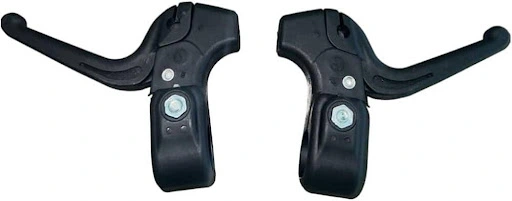
Injection molding is very important in the production of strong and lightweight bicycle parts.
Components such as helmets, grips, and saddles are produced using this material.
These parts have to be strong and lightweight to provide safety and performance.
For instance, helmets are made of a rigid outer shell and a foam liner, and both components are produced by injection molding.
This process can then be used to shave and mold the pads to fit perfectly around the cyclist for optimum protection.
5. Water Sports Equipment:

Water sports gear has to be waterproof, which means it has to be lightweight and able to endure several falls.
Some of the parts that are created by using injection molding include kayak seats, paddle handles, and fins.
These parts are intended for application in areas that expose the equipment to constant conditions, such as water and ultraviolet light.
Molded plastics are relatively durable and flexible to use in these applications as they guarantee that the equipment will remain strong and effective for a long time.
This injection molding process remains relevant in creating some of the best equipment for sporting disciplines, thus enhancing sportspersons’ performance.
Advantages of Injection Molding in Sports Equipment Manufacturing:

Injection molding has several significant benefits in producing sports equipment, establishing the process as imperative to the industry.
These advantages include high accuracy, minimum variations, economy, especially for large-scale production, effective utilization of material, shorter cycle time, and the ability to produce complex designs.
High Precision and Consistency:
- Injection molding is most suitable when complex geometric shapes are required and the parts have close tolerances. It enables manufacturers to generate shapes that are difficult to design and to achieve very small clearances. This precision is vital in producing items such as sports equipment, where standardization is a critical factor that will define performance and safety. The mass production process is customized to produce each piece with the right quality standards and no implications. This is particularly so in mass production, where you find that there is a need to produce highly standardized products, sometimes in large numbers.
Cost-Effectiveness for Mass Production:
- Another advantage of injection molding is the capability to deliver several thousands of identical parts per hour at an extremely low cost. Though the initial cost of developing a mold is high, the cost per unit produced is low since the mold has already been developed. The interesting thing about this process is that it is relatively fast and very effective for producing thousands of identical parts quickly. This makes injection molding ideal for volume production, where cost is further driven down by economies of scale.
Material Versatility:
- An advantage of injection molding is that it is compatible with numerous materials. This enables manufacturers to select the most suitable material for a particular application depending on whether the material needs to be flexible, strong, or resistant to certain environmental conditions. Substances can also be layered into a single product to improve efficiency and effectiveness. This flexibility of material selection is important for developing unique sports equipment depending on the intended use.
Rapid Production Speed:
- The injection molding technique enables the production of large quantities of sports equipment quickly. Once the mold is made, the process is very fast and efficient, as many of the same parts are replicated in a few seconds in each cycle. Such speed is crucial in terms of demand, particularly in the sports industry, where products need to be on the market as soon as possible. The fast turnaround schedule cuts delivery times, and that’s why injection molding is well-suited for high-volume production.
Design Flexibility and Complexity:
- Another notable advantage of injection molding is that the process is highly flexible in design. They allow manufacturers to produce shapes and fine details that are nearly impossible to achieve if another process is used. This flexibility is very important, especially for protective gear like helmets and other specialized equipment that needs specialized design and ergonomics. The capacity to incorporate complex characteristics directly into the mold production, for example, a textured surface or an integrated component, will improve the value of the final product.
The high levels of accuracy, speed, and flexibility inherent in injection molding are why this technology is at the core of sports equipment production today.
These benefits ensure that high-quality products are produced to meet the market needs of specific industries.
Materials Used in Injection Molding for Sports Equipment:
Injection molding uses different materials to manufacture superior-quality equipment for sporting activities.
Material selection is important as it determines the final product’s strength, efficiency, and reliability.
It is time to briefly discuss the materials often employed in this process.
Thermoplastics:
- Injection molding utilizes thermoplastics because of their flexibility and reusability. Polyethylene (PE) and polypropylene (PP) are the most widely used small-scale thermoplastics for manufacturing sports equipment. Polyethylene is also desirable because of its outstanding chemical resistance and impact strength; it is used in protective gear and protected parts. On the other hand, polypropylene is also very light in weight but very strong and does not get tired as quickly. These properties make it liable for use in items like water bottles, caps, and other items that may be required in sports. They both possess good workability, which can be shaped into different forms to create intricate profiles to make the equipment functional and safe for use.
Composite Materials:
- Carbon or glass fiber-reinforced plastics (FRPs) comprise a polymer matrix reinforced with fibers. Such materials are important in manufacturing sport-related devices or equipment since they have a high strength-to-weight ratio. For instance, cycling helmets and tennis rackets have carbon fiber-reinforced composites due to the need for strength and the minimal weight of the component. Such composites improve the stiffness and impact strength of the sports equipment, making them stronger and more effective. Such composites can be shaped into enhanced structures and patterns that provide an aerodynamic advantage and improve user-friendliness, which is crucial for competitive sports.
Innovations in Material Science:
- Modern technological innovations have enabled industries to create new biodegradable and recyclable materials used in injection molding. These innovations are very important to help enhance the sustainability of sports equipment manufacturing. For example, natural and biodegradable thermoplastics are currently being investigated as potential replacements for conventional plastics with comparable performance characteristics. Secondly, the emerging new recyclable materials have allowed manufacturers to reduce their waste during their production process, increasing the sustainable production value. These enhancements are instrumental in helping organizations address emerging environmental policies and satisfying the increasing customer concern for product sustainability.
Selecting material during injection molding is crucial to developing sports equipment that is highly performing, sustainable, and cost-effective.
High-performance thermoplastics, composites, and other emerging materials remain central to sports equipment development so that athletes can choose the equipment they want.
Challenges and Considerations in Injection Molding for Sports Equipment:
Although many limitations exist, injection molding is one of the most effective practices for manufacturing sports equipment.
All these issues should be dealt with so that manufacturing is well achieved and the products are high quality.
Initial Setup Costs:
- Some of the main difficulties of injection molding include higher initial expenses when purchasing a mold. Molds are generally made from steel or aluminum, and the design and manufacture of these molds involve a significant amount of capital expenditure. These initial costs are high, especially for the new firms venturing into internationalization. However, when applied to mass production, such costs are recovered over the long run through increased efficiency and improved cost control. Once the mold is done, it is an investment in the production process because it can make thousands of parts at a go, thus cutting down the overall cost per part.
Material Selection Challenges:
- Choosing the right material for injection molding is important, and it is not always easy. To ensure optimal performance, according to environmental conditions, there is a need to select material that meets certain characteristics of the equipment to be used in sports, such as density, elasticity, and wear and tear. For example, selecting a rigid material may cause it to crack under pressure, while, on the other hand, the material may offer little or no protection if it is too soft. Second, certain materials, especially when specific end-use properties, such as UV stability or durability, must be incorporated, would lead to additional costs. When selecting material, one can encounter problems such as low product performance, higher manufacturing cost, and perhaps total failure.
Quality Control:
- Quality control is significant in ascertaining the safety and sturdiness of the equipment used in sporting activities. There are a lot of factors that the injection molding assures in its process, like the mold temperature, pressure, and cooling time. Some of the ways through which quality can be controlled include inspection and testing at various stages of production. These measures assist in identifying defects at an early stage and guarantee that every product meets industry standards regarding safety and functionality. Quality control is not only about consistency but also about adherence to regulations that prevail when it comes to sports equipment. It is also important not to deviate from these standards, as it can lead to the cost associated with recalls and upsetting the company’s image.
Although injection molding has these advantages in the manufacturing of sports equipment, one has to be cautious with the setup costs, the type of material used, and the quality of the final product.
Innovations and Trends in Injection Molding:

Injection molding is a progressive technology; some new trends are being adopted.
They increase efficiency, decrease costs, and make manufacturing less environmentally detrimental.
Let’s explore three key trends. Areas of interest include 3D-printed molds and prototyping, smart molds and automation, and green technologies.
1. 3D Printed Molds and Prototyping:
Mold manufacturing is one of the areas that have benefited from 3D printing technology to a great extent.
Generally, making molds is a slow and costly process, but with the help of 3D printing, it is significantly faster and cheaper.
In 3D printing, it is possible to produce prototypes of intricate mold designs quickly, which can be crucial in the manufacturing process.
This limits the time between design and production and minimizes wasted material.
This mold is appropriate for small production cycles and trials of new concepts before their mass application.
2. Smart Molds and Automation:
Automation in injection molding is increasing as manufacturers seek to optimize production.
It is possible to incorporate sensors on smart molds to measure different parameters within the molding process, including temperature, pressure, and parts feed rates.
To achieve this, it is the duty of the firm to collect data, which is used to improve the production process and minimize the occurrences of mistakes.
It also allows for control of cycle times, a critical factor in mass production.
The use of smart structures in molds is considered a part of Industry 4. 0 trend: Integrated systems and real-time information management drive efficiency in manufacturing processes.
3. Eco-Friendly Practices:
Sustainability as an issue for injection molding has increasingly become significant.
There is a rising trend in the use of green materials in products, including bioplastics and recycled polymers.
Moreover, emerging trends such as using conformal cooling channels through 3D printing in the mold design reduce energy consumption due to better efficiency in the cooling systems.
These practices help sustain the production line and enhance product demand due to the growing popularity of eco-friendly products.
The injection molding industry entails innovations such as 3D-printed molds, smart automation, and efficient environmental conservation measures.
These trends are making injection molding faster, more accurate, and more sustainable, which is crucial for addressing the changing needs of the market.
Conclusion:
Injection molding has been established as one of the essential techniques for creating sturdy and efficient sports equipment.
It is precise, economical, and very flexible, and its applications range from protective gear to materials used in automobiles and aerospace.
A current industry trend includes the use of 3D-printed molds, which are smart automation that enhances quality and benefits sustainability.
HiTop Industrial is on the cutting edge of these advances, offering premium injection molding solutions for sporting goods.
From state-of-the-art equipment to a dedicated focus on quality, HiTop Industrial is your go-to provider of dependable and superior manufacturing services.
Contact us today to learn how we can help you with your production requirements.


 English
 Arabic
 German
 Spanish
 French
 Italian
 Javanese
 Korean
 Portuguese
 Russian
 Hindi
 Chinese
