

Agricultural equipment is an essential part of the farming process in today’s world. Technological tools such as tractors, harvesters, and irrigation systems make farming more efficient. The injection molding is a significant production technique used in this industry. It produces strong, light, and accurate parts. This process is useful in developing farm equipment that is useful, cheap, and easy to construct. However, how does injection molding contribute to the development of the agricultural sector? Let us look at the specific role and its effects on the future of farming in more detail.

Understanding Injection Molding:
- Injection molding is one of the most used manufacturing processes, which entails the creation of a precisely shaped plastic product that is made by injecting the material in a molten form into a mold. In this process, the plastic pellets are used in their raw form and then melted. The molten plastic is then injected into a metal mold created to design the shape and size of the product under high pressure. When the plastic has cooled sufficiently, it becomes solid in the shape of the mold tool and produces the following part. This process is repeated, thus achieving high levels of accuracy and efficiency in reproducing the same part or component.
- Some of the most frequently utilized molding materials employed in injection molding are polymers, including polyethylene (PE), polypropylene (PP), and polycarbonate (PC). These materials are selected to meet certain requirements, including strength, flexibility, chemical resistance, and heat. For instance, PE has a very good strength-to-weight ratio with low moisture absorption, which makes it suited for use in products such as pipes and containers. PP is very strong and stiff at the same time as a chemically resistant material and is, therefore, widely used in the automotive industry and medical equipment. PC is well known for its transparency and the ability to be used as impact-resistant material in various products such as safety helmets and lenses.
- There are various benefits associated with injection molding. It also enables the development of more complicated geometries to minimal tolerances; thus, it is ideal for creating parts that cannot be otherwise produced. It is also good for the production of large quantities as it helps to reduce the amount of waste material and labor costs. Moreover, injection molding is accurate and precise and offers high repeatability, so the parts’ quality is extremely standardized.
This process is especially significant in sectors involving the production of durable yet light and inexpensive parts and is, therefore, one of the most important manufacturing processes today.
Applications of Injection Molding in Agricultural Equipment:
This method serves a significant function in manufacturing different parts utilized in agricultural machinery. This manufacturing process reproduces robust, elegant, low-cost components that are otherwise impossible to form for current farming needs.
Machinery Components:
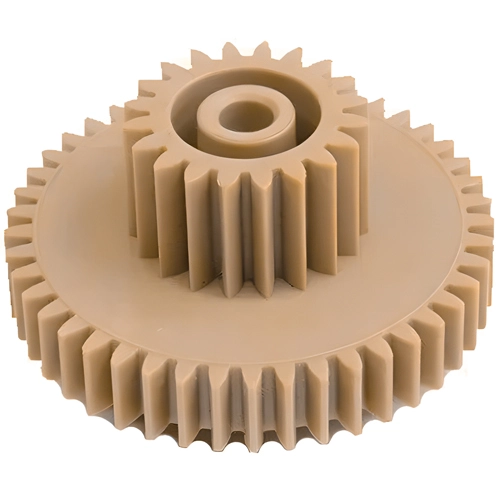
It is used to produce parts such as tractors, harvesters, and plows, among other agricultural products. Such parts include gears, housings, and handles for products that can be made of lightweight and durable plastics. Compared to metal, plastic components are not prone to rusting and can endure unfavorable external conditions. It ensures that machinery is durable and remains operational, especially when exposed to moisture and chemicals, which are common in most production facilities.
Irrigation Systems:

Water management is critical in agriculture, especially in controlling the amount of output required and minimizing wastage. Injection molding produces parts assembled into drip irrigation systems, sprinklers, and nozzles. Such parts must be perfect for the optimal supply of water in homes and the relevant infrastructure. It enables the development of accurate designs with special features to advance the efficiency of water and farming. Incorporating plastic in these components contributes to durability and resistance to clogging and degradation by water and fertilizers.
Storage and Transportation Solutions:
Agriculture involves storage and transportation of products, and injection molding is widely used in making crates, bins, silos, and pallets. These items should be stacked on one another, be hard-wearing, and not easily destroyed by natural events. Plastic components meet these requirements in that they are strong but not heavy like wooden or metallic ones. Plastic, on the other hand, is easy to clean, and its use minimizes contamination that can be witnessed with other forms of packaged materials used to store agricultural products.
Livestock Management:
When it comes to managing livestock, some of the key factors that need to be considered include the safety and reliability of the equipment. Feeding troughs, waterers, and many other components having significant roles in animal husbandry are manufactured using injection molding. Such components must be robust enough to endure the rigors of everyday use and the chemicals that cause bacterial and other contaminants. Plastic parts are ideal as they are hygienically convenient and strong enough to protect livestock.
In summary, injection molding positively impacts the performance and durability of agricultural machinery. The agricultural industry can create parts that enhance workflows and support environmentally friendly farming through this technology.
Technical Benefits of Injection Molding for Agriculture:

It is useful to consider the various technical advantages that injection molding can deliver in the production of agricultural equipment parts. These effects bring efficiency, cost, and sustainable use to the agricultural sector.
Design Flexibility:
Injection molding has been known to provide several design freedom opportunities for the designer. This process can help create complex shapes and designs tailored to a specific project. It allows the combination of many functions into one part, thus reducing the number of parts and the complexity of the assembly. This characteristic is especially important for the agricultural sector as many equipment are used in different operations, requiring some modification. For example, intricate shapes of parts used in irrigation systems or any other machinery can be made by modeling, which also improves the efficiency and strong performance of the part.
High Volume Production:
Injection molding is also beneficial for high-volume production, which makes it one of the most significant benefits of the method. However, after the tool has been developed, the process can generate a great deal of the same parts within acceptable tolerances for a long period. This stability is important in agricultural equipment since any change, even minor, may cause problems. Using injection molding proves efficient for large-scale production since the cost per unit reduces as the number of units to be produced increases. This is very advantageous in sectors that require several parts, such as agriculture, where there may be many valves, nozzles, and gears.
Environmental Considerations:
Injection molding also has the advantage of preserving the environment because recycled plastics are increasingly used. This positively affects the environmental impact associated with agriculture by eliminating the need for virgin materials in producing agricultural equipment. Furthermore, the injection molding process is accurate and efficient, reducing waste during product development and manufacturing processes. Another aspect of sustainability is energy efficiency, which lowers overall energy consumption and makes sustainability in agriculture an even more achievable cause.
These technical benefits make injection molding improve the performance and durability of the agricultural industry and make the industry move sustainably.
Challenges and Considerations:
Some of the technical issues arising from designing for injection molding are as follows.
- The first is to ensure that the design accommodates the molding process well since this is a key consideration for the design’s success. With complex shapes or uneven wall thickness, things such as warping or sudden failure of fills can occur. These problems can be reduced by keeping a part shape as geometrical sections and constant wall thickness as much as possible, but generally, it reduces form accuracy and product usefulness.
- Another important consideration is material selection. Depending on the chosen substance, the material determines the overall durability of the final material and its stability to environmental conditions such as heat or chemical products. Every material of polypropylene, polycarbonate, or any other resin used in production has properties that can only suit the product being intended for. Choosing an improper material results in poor performance, increased expenses, or even the inability to produce a product.
- The issue of maintaining a balance between the product’s cost and the material’s quality and longevity is always present. High-performance materials have improved because they possess better properties than low-performance materials, although they are usually costly. On the other hand, low-cost materials may be cheaper to use, yet they can affect the cost of production in terms of durability and quality. That is why manufacturers have to look for a balance where the selected material will have to provide the necessary performance characteristics without leading to an increase in the cost of production.
All these challenges involve design, engineering, and material choice issues that must be solved to produce the final optimized product.


 English
 Arabic
 German
 Spanish
 French
 Italian
 Javanese
 Korean
 Portuguese
 Russian
 Hindi
 Chinese
