

Injection molding is a manufacturing technique that fills a mold with molten plastic material. This method is crucial in the packaging industry, as it provides a perfect solution to the mass production of identical products such as caps, bottles, and containers that are produced to a high standard. Since the packaging is essential both for the product’s protection and its advertisement, the importance of injection molding cannot be overemphasized. However, what opportunities and threats are not easy to see, and what trends can be expected in this industry?
What will you learn?
This article provides an understanding of what injection molding is, its purpose, materials used in the process, and new advancements expected to shape the future.
Role of Injection Molding in Packaging:

Injection molding finds its importance in the packaging industry.
- It allows for the creation of superior, tough-packing products that will last in the market and be produced at a very high rate. This method helps standardize the shape and size of the produced items, which is suitable for mass production.
- Injection molding is versatile and economical for manufacturing products. It has the advantage of producing high volumes of products within a short time, lowering the production cost. Injection molding is also useful for evaluating packaging items like bottles, caps, and containers.
- Another clear benefit of designs is that they often contain high flexibility. Its ability to develop shapes and features in the product adds to customization due to the possibility of producing complex shapes and designs. This is particularly beneficial for brands that seek to incorporate packaging different from their competitors.
- Moreover, injection molding helps provide innovative solutions for sustainable packaging. As previously pointed out, many goods manufacturers use environmentally friendly approaches and recycling systems. For instance, this facilitates the reduction of plastic packaging, hence minimizing its effects on the environment. The method also helps conserve materials—there is little wastage of resources as they are worked on.
Common Applications of Injection Molding in Packaging

Injection molding is found to be used in a variety of ways in the packaging industry. Here are some of the most common ones:
- Caps and Closures: Injection molding is used to manufacture caps and closures of bottles and jars. This is important when sealing products and ensuring they do not come into contact with other materials. They are used in boxes for soft drinks, drugs, juices, cleaning products, and beverages.
- Bottles and Containers: This process results in the creation of robust and lightweight containers such as bottles. These are often employed to take drinks and foods and to manufacture cosmetics. These items can only be produced with some degree of uniformity in shape and size through injection molding, which is paramount in preserving product quality.
- Thin-Walled Containers for Food Storage: Food storage, for instance, is likely to be in thin-walled containers because they are easy to manufacture. They must be robust, yet they cannot be very heavy. Injection molding can make these containers at high volume, guaranteeing that they are food-safe and serve the handling they receive.
- Industrial Packaging: Injection molding is also used in industrial applications, where it creates rigid containers and bins. These containers are used for moving and holding massive or dangerous products, and the process ensures they are strong enough to withstand harsh conditions.
- Customized Promotional Items: It is notable that injection molding is helpful to companies who want to make promotional items that are different from others. Some of these are branded containers or even specialized packaging that acts as a product branding tool. This capability is helpful to marketing as it supplies aesthetic and utility-based packaging services.
This technique is crucial in the packaging industry since it produces accurate and comparable packaging items with few defects. Its flexibility and effectiveness meet various requirements in packaging, from the basic packaging of consumer goods to specific industrial purposes.
Material Choices for Injection Molding in Packaging

In injection molding, several materials form the packaging solutions. Each material is different and belongs to a certain group according to its characteristics and the usage that is given to it.
Here are some common materials used in injection molding for packaging:
- Polyethylene (PE):
Polyethylene is versatile due to its flexibility and chemical resistance and is used in several applications. It is portable, can be used on bottles and plastic bags, and is mostly used on food containers. HDPE is used for tough applications such as milk containers, while LDPE will be used for squeeze bottles since it’s less rigid.
- Polypropylene (PP):
Polypropylene (PP) is tough and does not wear out easily or become affected by chemicals or moisture. It is a material used for making caps, lids, and food containers. PP is also heat resistant and can be used on dishwasher-safe appliances.
- Polyethylene Terephthalate (PET):
Recent properties that add value to PET include strength and transparency. It is used widely in manufacturing beer and soft drink bottles, among other food containers. PET is also more or less recyclable, making it ideal for sustainable package
- Polystyrene (PS):
Polystyrene is a rigid and transparent material commonly used for disposable cutlery, food packaging and containers, and certain CD cases. It is easily formed into intricate structures and has high transparency, although it is a brittle material and cannot withstand high stresses.
- Polyvinyl Chloride (PVC):
PVC is good wear and chemical resistant and does not absorb water. It is used for types like shrink wraps and medical packaging. PVC has some special problems because of production and disposal. While it is an effective material, its usage is being reconsidered as a better environment option.
Considerations for Material Selection:
Selecting a material requires analysis of its mechanical properties, Thermal conductivity, chemical stability, and cost. For instance, PET is good for clarity and recyclability but lacks heat resistance characteristics in other common materials. PP is rigid, strong, and brittle at very low temperatures. PE is flexible, but its force-resistant capability differs depending on the thickness of the material.
Choosing appropriate materials guarantees the packaging has the correct degree of sturdiness, security, and environmental compliance. All of them have their advantages and should be used in specific fields of the packaging industry.
Challenges in Injection Molding for Packaging:
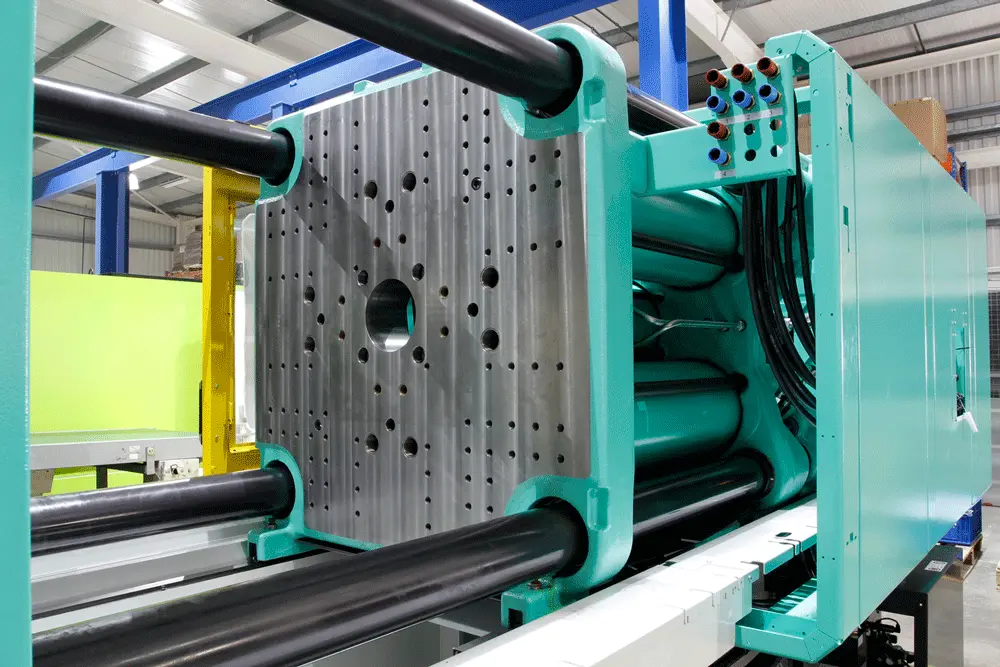
Despite its numerous benefits, injection molding for packaging experiences several challenges. Some of the challenges include tooling costs in the initial stages of development, the complexity of designs, the material or the lack of appropriate ones, and the effects of the product on the environment.
- Initial Tooling Costs: Mold creation involves relatively high initial costs. These molds require advanced detailing and high levels of material, which might be costly. Molding makes more sense when many pieces are to be molded, but it requires a considerable amount of capital at the start.
- Design Complexity and Material Limitations: The advantage of injection molding is that designs can be made complicated; hence, designs of the molds also become complicated. Some structures, like thin walls and sharp corners, are some of the features which lead to defects. Various materials also have characteristics that allow them to respond differently while molding. For instance, some of the materials may shrink to a higher degree, leading to certain complications with the sizes of the final product.
- Environmental Concerns and Sustainability Issues: The plastics used in injection molding pose environmental issues. The process requires a lot of energy, and one of the biggest problems is disposing of plastics. Manufacturers have been trying to solve this issue by adopting sustainability practices. These include using biodegradable products and enhancing recycling processes.
Solving these problems requires effective planning and financing. Therefore, manufacturers should consider the cost, productivity, and sustainability aspects of packaging to thrive in today’s packaging market.
Innovations and Future Trends:
Injection molding technology is gradually developing with enhanced innovations and trends. These changes are defining the future of the packaging industry.
- Sustainable and Eco-friendly Materials: The two major trends observed in using plastics are the incorporation of bioplastics and post-consumer recycled materials. Bio-degradable plastics, including PLA and PHA, are derived from renewable raw materials such as corn starch and sugarcane, respectively. These materials also assist in alleviating the generic environmental concern. Efforts to recycle are also being made more vigorously to reduce any waste that might be occasioned by the processes being employed as much as possible.
- Integration of Industry 4.0 Technologies: IoT and AI are revolutionizing injection molding. Such technologies can monitor and even predict faults, which can be used to optimize processes and minimize periods of inoperability. Smart manufacturing systems produce enhanced quality control and also advance manufacturing operations.
- Advancements in Smart Packaging: Packaging that involves the use of advanced technology in packing the product, known as smart packaging, is becoming popular. Such packaging can also engage consumers through features such as barcodes and sensors such as a QR code. Smart packaging can also inform consumers or buyers about the product’s status – whether it is fresh or safe. These advancements not only improve the product’s appearance and functionality for the users but also the supply chain and safety of products in circulation.
These trends show that the injection molding industry is still actively undergoing developmental changes in the global market. Thus, using sustainable materials, incorporating modern technologies, and establishing smart packaging frameworks will enable the industry to address future challenges and consumer needs.
Conclusion:
This injection molding technology greatly contributes to the packaging sector. It will help improve production efficiency and reduce the cost of packaging products while improving the quality and the ability to make diverse packaging items. It enables the production of a large number of goods while at the same time lending itself to mass production. It also possesses design versatility. Nevertheless, there are some drawbacks, such as the high initial price, intricate design, and ecological impacts; moreover, there are constant improvements, such as using eco-friendly materials and Industry 4.0 technologies. None of them are leading to the future of the industry.
HiTop Industrial is established as one of the leading manufacturers of injection molding services in the packaging sector. Using composite materials and other innovative technologies guarantees the best quality and recyclable packaging services. Contact us today for reliable and innovative injection molding services.


 English
 Arabic
 German
 Spanish
 French
 Italian
 Javanese
 Korean
 Portuguese
 Russian
 Hindi
 Chinese
