

POM injection molding is a highly efficient process for creating durable and precise plastic parts.
POM, short for polyoxymethylene, is an engineering thermoplastic known for its exceptional strength, low friction, and dimensional stability, making it a preferred material for high-performance applications.

This process plays a crucial role across a wide range of industries, from automotive and medical devices to consumer goods and industrial machinery.
With its ability to deliver reliable results in demanding environments, POM injection molding has become an essential method for producing parts that require rigidity, accuracy, and long-term durability.
What is Polyoxymethylene (POM)?

Polyoxymethylene (POM), also known as acetal, polyacetal, or polyformaldehyde, is a semi-crystalline thermoplastic renowned for its high strength, stiffness, and low friction properties.
Chemically, it is a polymer of formaldehyde with a linear molecular structure that imparts remarkable mechanical and thermal characteristics.
Two Primary Types of POM:
Homopolymer POM: Known for its higher strength, stiffness, and crystallinity, this variant offers exceptional mechanical properties but has a narrower processing window. A well-known example is Delrin® by DuPont.
Copolymer POM: Offers better thermal stability and resistance to chemicals like acids and alkalis. It is easier to process and less prone to degradation. Common trade names include Celcon® by Ticona and Kepital® by Korea Engineering Plastics.
Since its commercial introduction in the 1960s, POM has become a cornerstone material in industries requiring durability, precision, and dimensional stability.
Whether it’s Delrin® for mechanical components or Celcon® for fluid-handling applications, POM continues to meet the demands of high-performance manufacturing.
Key Advantages of POM

High Strength and Creep Resistance: POM offers outstanding mechanical properties, including high tensile strength and stiffness. Its resistance to creep ensures dimensional stability under prolonged loads, making it ideal for precision parts like gears and bearings.
Low Friction and Wear Resistance: With a low coefficient of friction and excellent self-lubricating properties, POM is perfect for applications that involve sliding motion or exposure to mechanical stress, such as conveyor belts and bushings.
Chemical and Abrasion Resistance: POM demonstrates strong resistance to fuels, solvents, and mild acids, making it suitable for automotive components, industrial machinery, and fluid-handling systems.
FDA Compliance for Food-Safe Applications: Certain POM grades meet FDA, USDA, and NSF standards, allowing safe use in food processing equipment and medical devices like syringe components and valves.
Disadvantages of POM
UV Sensitivity: POM lacks natural UV resistance and may degrade when exposed to prolonged sunlight. Protective coatings or additives are often required for outdoor applications.
High Shrinkage Rates: POM exhibits a shrinkage rate of 2–3.5%, which can complicate the design and molding of high-precision parts.
Decomposition Risks at High Temperatures: If processed above its recommended temperature range (typically 190–230°C), POM can decompose, releasing harmful formaldehyde gases that can corrode molds and pose safety hazards.
Properties of POM Plastic

Polyoxymethylene (POM) is celebrated for its remarkable physical, mechanical, and chemical properties, which make it an ideal material for precision parts.
Thermal Properties
Melting Temperature: POM exhibits a melting temperature range of 190–230°C, depending on whether it’s a homopolymer or copolymer. This high range allows it to withstand elevated processing temperatures.
Heat Resistance and Thermal Stability: POM can endure continuous use at temperatures up to 100–120°C, making it reliable for applications exposed to moderate heat. Homopolymer POM has slightly better short-term heat resistance, while copolymer POM offers better long-term stability.
Mechanical Properties

Tensile Strength: POM offers exceptional strength and rigidity, with tensile strength reaching up to 72 MPa. This makes it suitable for load-bearing applications like gears and structural components.
Dimensional Stability: Despite its high shrinkage during molding (2–3.5%), POM demonstrates excellent dimensional stability once cooled, ensuring precision in finished parts.
Impact Resistance: POM’s toughness and ability to resist sudden impacts make it ideal for applications requiring durability, even in low-temperature environments.
Chemical and Environmental Resistance
Chemical Resistance: POM resists most fuels, solvents, and mild acids, making it suitable for automotive fuel systems and industrial fluid handling. However, it’s susceptible to damage from strong acids, alkalis, and UV radiation.
Abrasion and Wear Resistance: With its low coefficient of friction and self-lubricating properties, POM excels in applications involving frequent movement, such as bushings and sliding mechanisms.
Moisture Absorption and Electrical Insulation
Low Moisture Absorption: POM has a water absorption rate of only 0.2–0.5%, enabling it to maintain dimensional stability in humid conditions or when in contact with water.
Electrical Insulation: Its excellent dielectric properties make POM suitable for electrical insulation applications, including connectors and switch components.
POM Injection Molding Process

The POM injection molding process requires careful attention to material preparation, temperature control, and mold design to ensure high-quality parts.
Material Preparation
While POM has low moisture absorption (0.2–0.5%), drying is recommended for optimal performance, especially if the material has been exposed to humid environments.
- Drying temperature: 80–90°C
- Drying time: 2–4 hours
Melting and Injection
Recommended Temperatures
The processing temperature varies depending on the type of POM:
- Homopolymer POM: 190–230°C
- Copolymer POM: 190–210°C
Exceeding these ranges can lead to decomposition, releasing formaldehyde and causing part defects.
Optimal Injection Speed and Backpressure

- Injection speed: Medium to fast. Too slow may cause ripples, while excessive speed can lead to overheating.
- Backpressure: Low, ideally below 200 bar, to prevent material degradation and ensure smooth flow.
Mold Design and Cooling
Mold Material Recommendations: Stainless steel molds are ideal for POM to resist the material’s corrosive nature in its molten state. Avoid copper-based materials as they catalyze decomposition.
Cooling Channels for Dimensional Stability: POM requires even cooling to minimize warping and shrinkage (2–3.5%). Well-designed cooling channels help maintain part precision and prevent uneven crystallization.
Ejection and Post-Treatment

Stress-Free Ejection
POM’s low coefficient of friction aids in easy ejection, but designs should include:
- Draft angles of 0.5–1° for most parts.
- Smooth surfaces to reduce stress concentrations during ejection.
Annealing for Precision Parts
For high-precision applications, annealing can relieve internal stresses, enhancing dimensional stability and mechanical strength.
Typical annealing involves heating parts at a controlled temperature below the glass transition point for several hours.
Design Guidelines for POM Parts
Designing POM parts requires attention to detail to optimize performance and minimize defects.
The following guidelines ensure parts are reliable, dimensionally stable, and suited for their intended applications.
Wall Thickness Uniformity

Maintaining consistent wall thickness is crucial in POM injection molding.
Variations in thickness can lead to uneven cooling, causing warping and shrinkage issues.
For best results, keep wall transitions gradual and avoid abrupt changes, as they can create weak points or internal stress.
Use of Draft Angles
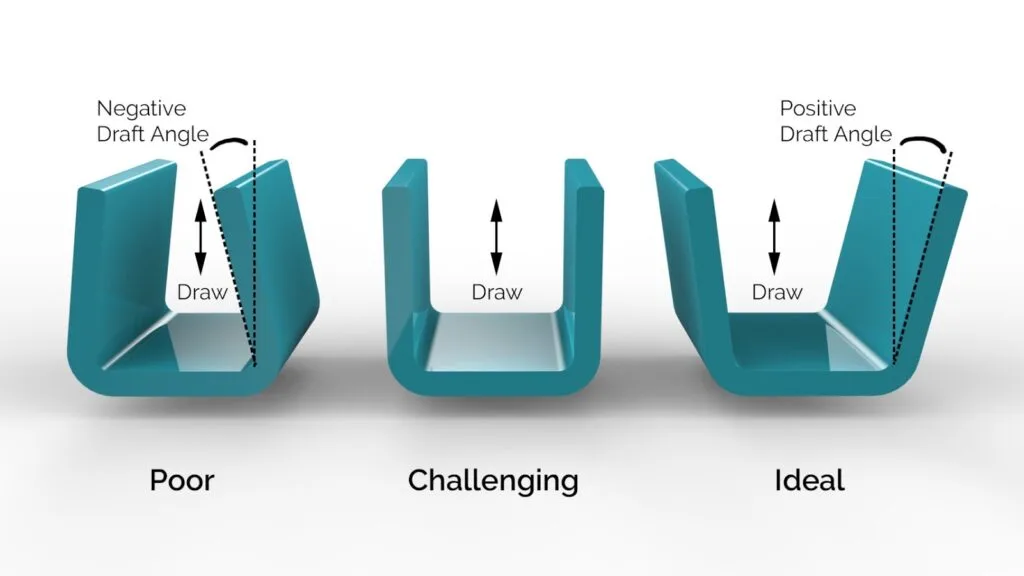
Incorporating draft angles in the design facilitates smooth ejection of parts from the mold.
A typical angle of 0.5–1° ensures that parts release without damage.
For precision applications like gears, minimal or zero draft angles may be used, but these designs require advanced ejection systems.
Rounded Corners to Minimize Stress Concentrations

Sharp edges in POM parts can act as stress concentrators, increasing the likelihood of failure under load.
Rounded corners distribute stress more evenly, enhancing durability and reducing the risk of cracking.
Aim for radii of at least 25% of the nominal wall thickness for optimal performance.
Avoiding Contact with Copper
When POM comes into contact with copper or copper alloys, a chemical reaction can trigger decomposition, producing formaldehyde and degrading part quality.
To prevent this, ensure that mold components, runners, and gates are made from stainless steel or other non-reactive materials.
Industrial Applications of POM Injection Molding
POM injection molding plays a vital role across industries due to the material’s exceptional mechanical properties and versatility.
Automotive Applications

POM is extensively used in the automotive sector for its strength, dimensional stability, and ability to withstand harsh conditions.
Common applications include fuel system components like caps and valves, gears in transmission systems, and seat adjusters that require high fatigue resistance and low friction.
Medical Applications

In the medical field, POM’s chemical resistance and dimensional accuracy make it a go-to material.
It is frequently used for producing syringes, surgical tools, and medical devices that demand sterility, precision, and durability over repeated use.
Industrial Applications

The plumbing and irrigation industries rely on POM for components such as valves, pipe fittings, and sprinkler heads.
Its ability to resist moisture absorption and maintain structural integrity under pressure ensures reliable performance in fluid-handling systems.
Consumer Goods Applications

POM’s wear resistance and aesthetic versatility make it a popular choice for zippers, fasteners, and components in furniture.
These products benefit from the material’s smooth finish, durability, and ease of molding into intricate shapes.
Alternatives to POM in Injection Molding

While POM offers exceptional strength, low friction, and dimensional stability, it’s essential to consider alternatives for projects with specific requirements.
Materials like Nylon, HDPE, and PP provide viable options depending on the application.
Quick Overview
Nylon

Nylon, or polyamide, is known for its superior wear resistance and impact strength.
It performs exceptionally well in high-temperature environments and offers better UV resistance compared to POM.
However, Nylon absorbs more moisture, making it less suitable for applications requiring high dimensional stability in humid conditions.
HDPE (High-Density Polyethylene)
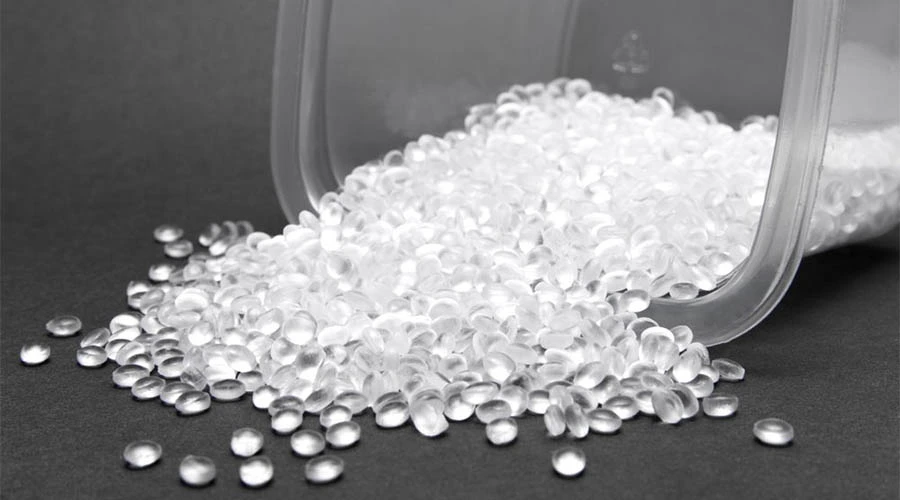
HDPE is a cost-effective material with excellent chemical resistance and low moisture absorption.
It is softer than POM, making it ideal for applications like packaging and piping, where flexibility is crucial.
However, HDPE lacks the mechanical strength and precision that POM provides.
PP (Polypropylene)

PP is lightweight, recyclable, and offers outstanding chemical resistance, especially in acidic and alkaline environments.
Its lower cost and versatility make it ideal for consumer goods and lightweight parts.
However, PP has lower tensile strength and thermal resistance compared to POM, limiting its use in high-load or high-temperature scenarios.
When to Choose Alternatives
- Nylon is preferred for applications requiring high-impact resistance and durability under extreme temperatures.
- HDPE is ideal for cost-sensitive projects involving chemicals or water exposure.
- PP works well in non-load-bearing, lightweight designs with environmental considerations.
Tips for Successful POM Injection Molding

Choosing the Right POM Grade

Selecting the correct POM grade is critical for achieving optimal performance in injection molding.
Homopolymer POM, like Delrin®, offers superior mechanical properties such as higher tensile strength and rigidity, making it ideal for precision parts like gears and bearings.
On the other hand, copolymer POM provides better thermal stability and resistance to chemicals, making it more suitable for fluid-handling applications and environments with fluctuating temperatures.
Using CAD Tools to Optimize Mold Design

Leverage CAD software and design for manufacturing (DFM) principles to refine mold designs.
Ensure uniform wall thickness to avoid shrinkage issues and incorporate draft angles to facilitate smooth ejection.
Rounded corners should be added to minimize stress concentrations, and attention must be paid to gate placement and cooling channel design for efficient heat dissipation.
Maintenance Tips for Machines and Molds
Preventing POM decomposition is essential for consistent product quality.
Use stainless steel molds to resist corrosion caused by formaldehyde by-products.
Regularly inspect and clean molds to remove any residual material, especially after prolonged production runs.
Maintain optimal barrel and nozzle temperatures to avoid overheating, which can lead to decomposition and the release of corrosive gases.
Finally, ensure machines are properly calibrated to handle the specific grades of POM used in production.
Common Challenges and Solutions in POM Injection Molding

High Shrinkage Rates
One of the most common challenges with POM is its high shrinkage rate, which can lead to dimensional inconsistencies in the final product.
This issue often arises due to the material’s high crystallinity.
Solutions:
To mitigate this, ensure precise pressure adjustments during the molding process, particularly during the holding phase.
Additionally, focus on mold design refinements, such as maintaining uniform wall thickness and incorporating cooling channels that promote even heat dissipation.
Overheating and Decomposition

POM is highly sensitive to heat and can decompose if exposed to temperatures exceeding its decomposition threshold.
This results in the release of corrosive gases, which can damage molds and machinery.
Solutions:
Employ strict temperature monitoring across all heating zones, keeping the barrel and nozzle within the recommended range.
Using shorter cycle times can also reduce the risk of overheating and material degradation.
Stress Cracks
Stress cracks often occur in parts subjected to high mechanical loads or when POM parts are over-molded with inserts.
This can compromise both aesthetics and functionality.
Solutions:
Perform proper annealing to relieve internal stresses after molding. For overmolded parts, preheat the inserts to reduce thermal shock and prevent stress buildup around the insert-mold interface.
FAQs About POM Injection Molding
1. What is the main difference between homopolymer and copolymer POM?
Homopolymer POM offers higher tensile strength and stiffness, while copolymer POM provides better thermal stability and resistance to degradation.
2. Can POM be recycled for injection molding?
Yes, POM can be recycled, but the proportion of recycled material should typically not exceed 20–30% to maintain part quality.
3. What industries commonly use FDA-compliant POM grades?
FDA-compliant POM grades are commonly used in food processing, medical devices, and pharmaceutical equipment.
4. Why should POM molds avoid contact with copper?
Copper can act as a catalyst for POM decomposition, leading to material degradation and potential release of harmful gases.
5. What is the recommended drying time for POM materials before molding?
Although POM has low moisture absorption, drying at 80°C for 2–4 hours is recommended if the material is stored in humid conditions.
Conclusion

POM injection molding offers exceptional strength, dimensional stability, and versatility, making it a go-to choice for industries like automotive, medical, and consumer goods.
By understanding POM’s properties and following best practices, manufacturers can achieve precision and durability in their parts.
Looking for reliable POM injection molding services?
Our expertise ensures high-quality solutions tailored to your needs.
Contact us today for professional guidance and seamless production!


 English
 Arabic
 German
 Spanish
 French
 Italian
 Javanese
 Korean
 Portuguese
 Russian
 Hindi
 Chinese
