

In the world of materials, strength, hardness, and toughness are three essential properties that often determine a product’s durability and performance.

While these terms might seem similar, each represents a unique characteristic that plays a crucial role in engineering and design.
Understanding these differences can help engineers and designers choose the right materials for various applications, whether the goal is to withstand heavy loads, resist surface scratches, or absorb impact.
Choosing the right property not only improves product quality but also ensures that it meets specific functional requirements over time.
What is Strength?

Strength is a material’s ability to endure external forces without undergoing permanent deformation or breaking.
When a material is subjected to stress, its strength determines how much force it can handle before reaching a critical point where it starts to change shape or, worse, fails.
This property is essential in applications that require load-bearing capacity, like structural components, machinery parts, and heavy-duty tools.
Types of Strength
Tensile Strength: This is the maximum stress a material can withstand when stretched or pulled. Materials with high tensile strength, such as steel cables or ropes, can endure significant pulling forces without snapping.
Yield Strength: Yield strength marks the point at which a material begins to deform permanently. Up until this point, the material will return to its original shape once the force is removed, but beyond it, the material will retain some deformation.
Compressive Strength: This measures a material’s resistance to forces pushing inward. Materials with high compressive strength, like concrete, are ideal for applications like building foundations, where they must resist squeezing forces.
Shear Strength: Shear strength refers to a material’s ability to resist sliding forces that cause layers within the material to slide past one another. It is crucial that components like bolts and fasteners endure such forces without failure.
How Strength is Measured

Strength is typically measured through various testing methods:
- Tensile testing involves stretching a sample until it fractures and measuring its tensile strength.
- Yield Point Testing identifies the point at which the material begins to deform plastically, highlighting its yield strength.
- Compression Testing measures how much compressive force a material can handle before it fails.
What is Hardness?

Hardness refers to a material’s ability to resist surface deformation, including scratching, denting, or abrasion.
In simple terms, hardness measures how well a material can withstand wear and surface damage.
This property is especially valuable in applications where materials encounter abrasive forces or need to maintain a smooth, undamaged surface under frequent contact.
Types of Hardness Tests
There are several methods to measure hardness, each suitable for different material properties and applications:
Rockwell Hardness Test: This widely-used test measures hardness by pressing a conical or spherical indenter into the material’s surface, with results displayed on the Rockwell scale (like HRC for harder materials). It’s quick and typically used for metals, making it ideal for industrial applications.
Vickers Hardness Test: This method employs a diamond pyramid indenter to press into a small area, making it ideal for precise measurements on thin or delicate materials. Results are given in HV (Vickers hardness), which is valid for microscopic analysis and research labs.
Brinell Hardness Test: The Brinell test uses a larger steel or carbide ball to create an indentation, which is then measured for hardness. This method works well on softer or uneven materials and gives results on the HB (Brinell hardness) scale.
Applications of Hard Materials

Materials with high hardness are essential in areas where wear resistance is critical.
Some key applications include:
Cutting Tools: Hardness is vital for tools like drill bits and saws, as they need to withstand intense friction without wearing down.
Protective Coatings: High-hardness coatings protect surfaces from scratching and denting, prolonging the life of materials like machinery components and automotive parts.
Abrasive Surfaces: Materials like diamond and ceramic are highly hard and used in abrasive applications, from grinding wheels to polishing tools, where surface resilience is essential for effective operation.
What is Toughness?

Toughness is a material’s ability to absorb energy and resist fracturing under sudden impacts.
Unlike hardness or strength alone, toughness requires a balance between strength and flexibility—allowing a material to endure impacts without breaking.
Tough materials can deform slightly under pressure but won’t easily shatter, making them ideal for applications where resilience to shock and stress is critical.
Ductility and Its Role in Toughness
Ductility, a material’s capacity to stretch or deform without breaking, contributes significantly to toughness.
Materials that are more ductile can withstand higher levels of energy before fracturing, making them inherently tougher.
For instance, metals like copper and steel exhibit both toughness and ductility, allowing them to absorb impact and deform without failing under stress.
Measurement and Applications

Toughness is commonly measured through impact testing, where a material is struck to observe how much energy it absorbs before breaking.
One standard test is the Charpy impact test, which gives insight into a material’s performance under real-world conditions.
In practical applications, toughness is essential in areas where materials face heavy loads, sudden impacts, or extreme conditions.
Examples include:
Protective Gear: Tough materials, like kevlar in body armor, absorb impact energy and prevent penetration.
Heavy Machinery Components: Parts like crane hooks and construction equipment rely on toughness to handle dynamic loads and resist fracture.
Toughness ensures that a material can handle high-impact environments without breaking, making it a crucial property for durability in challenging conditions.
What is Stiffness?

Stiffness is a material’s ability to resist deformation in response to an applied force.
Unlike strength, which measures how much load a material can bear before breaking, stiffness focuses on how much a material bends or stretches under load.
This property is crucial in structural applications where maintaining shape is essential.
Types of Stiffness:
- Axial Stiffness: Resistance to stretching or compression along a single axis.
- Torsional Stiffness: Ability to resist twisting forces, crucial in applications involving rotation.
- Flexural Stiffness: Resistance to bending, often measured in materials used for beams or support structures.
How Stiffness is Measured
Stiffness is typically evaluated using Young’s Modulus, which describes the ratio of stress (force per unit area) to strain (deformation) within the material’s elastic limit.
Higher values indicate a stiffer material, such as steel, while lower values indicate more flexibility, as seen in rubber.
Applications of Stiff Materials

Stiffness is especially important in fields like construction (beams, frames), aerospace (aircraft wings), and automotive (chassis components), where stability and shape retention under load are critical to performance and safety.
Comparing Strength, Hardness, and Toughness

Quick Overview
Core Differences
Understanding the unique roles of strength, hardness, and toughness is crucial for making the right material choices in engineering.
While these terms are often used together, each describes a distinct property:
- Strength focuses on a material’s ability to withstand force without breaking or deforming permanently.
- Hardness refers to resistance against surface deformation or abrasion, helping materials resist scratching and wear.
- Toughness is the capacity to absorb energy and withstand impact without fracturing, providing resilience under sudden stress.
These differences guide how materials perform under specific conditions, making each property essential in different ways for material selection.
Relationships and Overlaps

Some materials exhibit multiple properties, but the combinations can vary widely:
- Strong and Hard: Metals like steel are both strong and hard, resisting force and surface wear, ideal for structural components and tools.
- Hard and Brittle: Ceramics are hard and withstand surface wear but are brittle, meaning they can shatter under impact, making them suitable for wear-resistant but low-impact applications.
- Tough but Not Hard: Rubber is tough, absorbing impact and bending without breaking, but lacks hardness. It’s perfect for applications like vibration dampening and impact absorption.
These relationships help inform material choices for specific tasks, as each property affects a material’s overall performance.
Material Selection Tips

Selecting materials based on strength, hardness, and toughness depends on the application and the stresses involved.
Here are some practical tips:
- For High Wear Resistance: Choose hard materials like hardened steel or ceramics, which are ideal for cutting tools or wear-resistant surfaces.
- For Load-Bearing Applications: Opt for strong materials like structural steel or titanium, which can handle heavy stress without deforming.
- For Impact Resistance: Use tough materials like rubber or ductile metals that can absorb shocks and sudden forces, well-suited for machinery parts and protective gear.
Balancing these properties ensures durability and performance, allowing engineers to meet the specific demands of each project.
Factors Affecting Strength, Hardness, and Toughness
Material Composition

The composition of a material plays a significant role in determining its strength, hardness, and toughness.
For instance, adding carbon to steel can enhance its hardness and strength but may reduce its toughness.
Similarly, alloying metals with elements like chromium, nickel, or vanadium can create materials with improved wear resistance or flexibility, making them ideal for specific applications.
Heat Treatment and Processing

Processes like quenching, tempering, and annealing directly impact a material’s properties by altering its internal structure:
- Quenching involves rapidly cooling a heated material, which increases hardness but can reduce toughness due to brittleness.
- Tempering follows quenching to slightly soften the material, restoring some flexibility and improving toughness while maintaining much of the hardness.
- Annealing slowly cools the material to enhance ductility and reduce hardness, making it easier to machine and work with.
These treatments allow engineers to tailor materials to meet precise requirements, balancing strength, hardness, and toughness.
Environmental Influences
External factors like temperature, corrosion, and prolonged stress affect material properties over time. For example:
- High temperatures can reduce the hardness and strength of metals, making them more susceptible to deformation.
- Corrosive environments, such as exposure to saltwater or chemicals, can degrade material surfaces, weakening their structural integrity.
- Continuous or cyclic stress can lead to fatigue, where materials gradually lose strength and toughness, especially in high-stress applications like bridges or machinery.
Understanding these influences helps engineers anticipate material behavior in various conditions, allowing for better design choices that enhance durability and performance in real-world applications.
Practical Applications in Industry
Aerospace

In the aerospace industry, strength and toughness are essential for components exposed to high stress and dynamic forces.
Materials used in aircraft frames, landing gear, and turbine blades must withstand extreme conditions without deforming or fracturing.
High-strength alloys, such as titanium and certain steels, are commonly used to ensure safety, durability, and performance at high altitudes and speeds.
Automotive

For the automotive sector, hard materials are crucial in areas where components face high wear.
Engine parts like pistons, camshafts, and gears require materials that resist abrasion and maintain performance over time.
Hardened steels and ceramics are often chosen for these applications, providing long-lasting durability and efficiency in vehicle engines and transmissions.
Construction
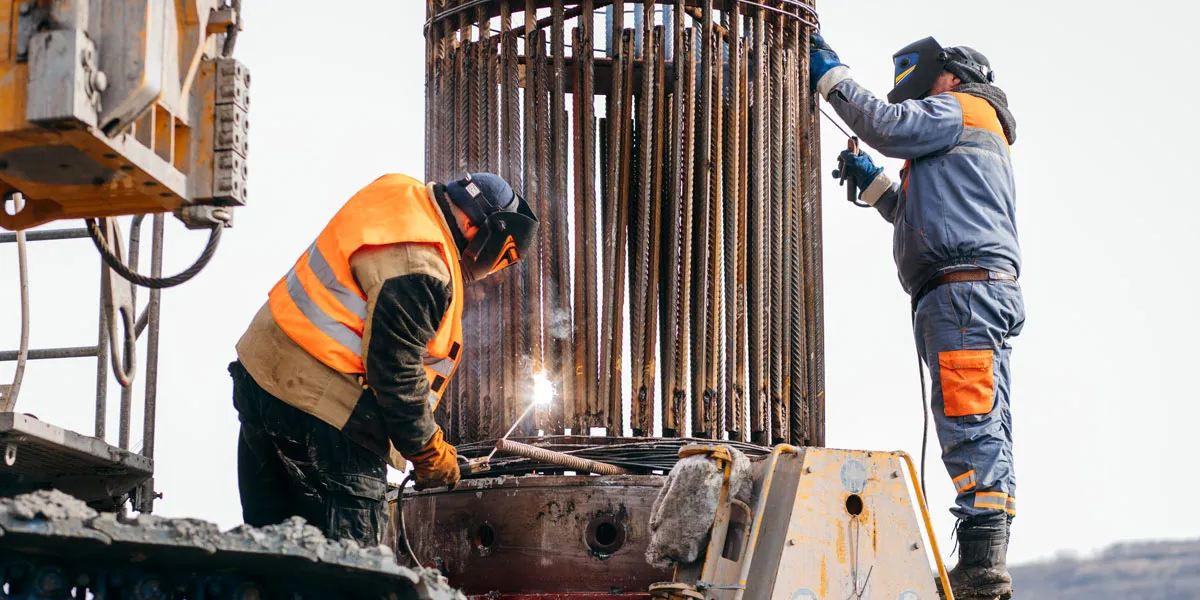
The construction industry relies on materials with high strength and toughness for load-bearing elements like steel beams, concrete columns, and structural reinforcements.
These materials need to withstand significant loads without compromising stability, making them essential in buildings, bridges, and infrastructure projects.
Reinforced concrete and structural steel are popular choices for their ability to handle compressive and tensile stresses, ensuring long-term structural integrity.
Electronics and Medical Devices

In electronics and medical devices, precise hardness is vital for components that must resist scratches and maintain smooth surfaces.
Scratch-resistant screens for smartphones and tablets are often made from hardened glass or sapphire to protect against everyday wear.
In the medical field, implants and surgical instruments require materials that resist deformation and wear over time; stainless steel and titanium alloys are commonly used for their durability and biocompatibility.
Testing Methods and Standards
Testing Equipment

Specialized equipment and techniques are employed in material testing labs to assess strength, hardness, and toughness.
For measuring strength, tensile testing machines apply controlled force to determine a material’s yield and tensile strength.
Hardness is often tested using machines like the Rockwell, Vickers, or Brinell testers, each designed to measure the indentation hardness based on material type and application requirements.
Impact testing equipment, such as the Charpy or Izod testers, is commonly used to evaluate toughness by gauging how well a material absorbs energy upon impact.
Industry Standards and Certifications
To ensure quality and consistency, industries follow established standards like ASTM (American Society for Testing and Materials) and ISO (International Organization for Standardization).
These standards specify testing procedures, certification requirements, and quality benchmarks for different material properties.
For instance, ASTM E8 outlines methods for tensile testing metals, while ISO 6508 governs Rockwell hardness testing.
Adhering to these standards is crucial for manufacturers to meet safety, reliability, and performance criteria across various applications, ensuring materials perform as expected in real-world conditions.
Common Mistakes in Material Selection

Confusing Properties
One of the most frequent mistakes in material selection is confusing strength, hardness, and toughness and using them interchangeably.
For example, a designer might choose a very hard material, assuming it will also be tough enough for high-impact applications, only to find that the material is brittle and fractures under stress.
This confusion can lead to product failure in applications such as drill bits that are strong and hard but lack the toughness needed for high-impact usage, resulting in unexpected breakage.
Balancing Trade-offs
Designing with optimal performance in mind requires balancing the unique trade-offs between strength, hardness, and toughness.
When selecting materials, consider the specific demands of the application.
For instance, cutting tools prioritize hardness to resist wear, while structural components in construction require both strength and toughness to endure heavy loads and resist impact.
By understanding the properties and testing materials against real-world application demands, designers can achieve a well-rounded product that performs effectively without compromising longevity or safety.
FAQs about Strength, Hardness, and Toughness
Conclusion

Understanding the distinct roles of strength, hardness, and toughness in materials is essential for making informed decisions in engineering and manufacturing.
Each property serves a unique purpose, from enhancing durability to ensuring wear resistance, helping to optimize product performance in various applications.
If you’re seeking precision-crafted parts in the injection molding, die casting, or CNC industry—with materials that balance strength, hardness, and toughness—we’re here to help.
Contact us today to discuss your project and find the ideal solution tailored to your requirements.


 English
 Arabic
 German
 Spanish
 French
 Italian
 Javanese
 Korean
 Portuguese
 Russian
 Hindi
 Chinese
