


Warpage is one of the most common and frustrating defects in injection molding.
It occurs when a molded plastic part doesn’t maintain its intended shape after being ejected from the mold, leading to issues like bending, twisting, or uneven surfaces.
In plastic production, warpage can compromise both the aesthetic appeal and the functional quality of the final product, making it a critical issue to address.
Ensuring that parts retain their precise shape is essential not only for product performance but also for maintaining efficiency in the manufacturing process.
By understanding the causes of warpage and applying the right solutions, manufacturers can produce high-quality, dimensionally accurate plastic parts that meet customer expectations.
What is Warpage in Injection Molding?

Warpage in injection molding refers to the distortion or deformation of a plastic part after it has been ejected from the mold.
This defect occurs when different areas of the part cool and shrink at uneven rates, causing the part to change shape.
There are several types of warpage, including bending, twisting, bowing, or general uneven shrinkage.
These deformations can result in visible defects or functional issues, such as parts not fitting together correctly or not performing as intended.
Warpage is a critical problem because it compromises both the structural integrity and aesthetic appeal of the molded part.
Types of Warpage in Injection Molding
1. Regional Warpage

Regional warpage occurs when there is a difference in shrinkage rates between various regions of the part, typically between thicker and thinner sections.
Thicker areas tend to cool and shrink more slowly, while thinner areas solidify faster, leading to distortion.
This type of warpage is common in parts with uneven wall thickness.
2. Directional Warpage

Directional warpage happens when there are parallel or perpendicular shrinkage variations to the flow of material during injection.
Amorphous plastics typically shrink more in the direction of flow, while semi-crystalline plastics tend to shrink perpendicular to the flow.
This difference in shrinkage can lead to the part twisting or bending.
3. In-plane vs. Thickness Shrinkage

In this type, the part experiences inconsistent shrinkage in the thickness direction versus its surface area.
This imbalance often causes the part to bend or bow as one side shrinks more than the other.
In-plane shrinkage is generally more controlled, while thickness-related shrinkage can create significant warping in the final product.
Causes of Warpage in Injection Molding
1. Cooling Rate Issues

One of the most significant causes of warpage is uneven cooling across the part.
When different sections cool at different rates, it results in differential shrinkage, causing the part to warp.
Ensuring uniform cooling throughout the mold is essential to prevent such deformations.
The cooling system must be properly designed to distribute heat evenly and avoid hot or cold spots.
Cooling Optimization
The cooling phase is where most warpage issues arise.
Ensure even cooling rates by designing an efficient cooling system with properly placed cooling channels.
Using temperature-controlled molds helps prevent hot and cold spots, promoting uniform shrinkage and reducing the risk of warping.
2. Material-Related Causes

The type of plastic used can greatly influence warpage.
Amorphous plastics (e.g., ABS, polystyrene) shrink more uniformly, while semi-crystalline plastics (e.g., polypropylene, nylon) shrink more in certain directions.
Additionally, fiber-reinforced materials, often used for added strength, can cause warpage if the fibers are unevenly aligned, leading to non-uniform shrinkage.
Material Solutions
Choosing the right material is critical to reducing warpage.
Select materials with predictable shrinkage and flow properties to ensure uniformity during cooling.
Fiber-reinforced polymers can help strengthen parts, but fiber orientation must be carefully managed to avoid uneven shrinkage and resulting warpage.
3. Mold Design Issues

Mold design plays a key role in preventing warpage.
Improper gate location or inadequate gate size can lead to uneven material flow, resulting in localized shrinkage and warping.
Variations in wall thickness can also create stress points within the part, further increasing the likelihood of warpage as thicker sections take longer to cool and shrink more.
Mold Design Improvements
Warpage can often be traced back to the mold itself.
Redesign gates and runners to ensure balanced material flow across the mold.
Additionally, it increases wall thickness uniformity to reduce stress concentrations, which contribute to warpage.
4. Machine Settings
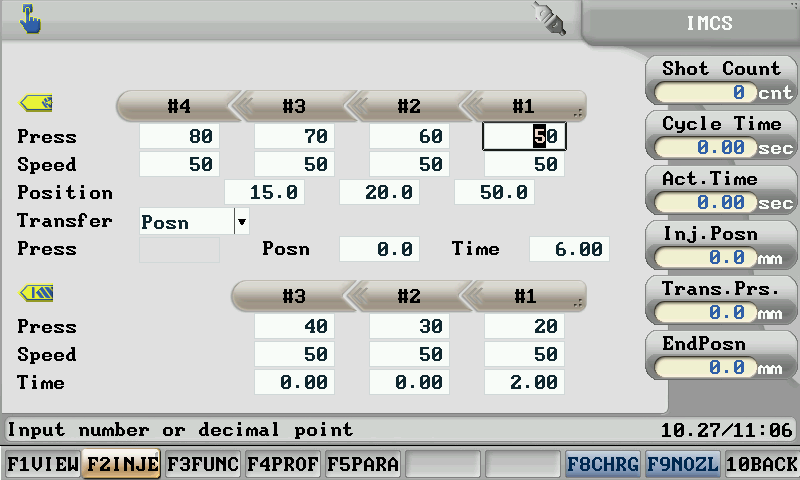
Incorrect machine settings can contribute to warpage.
Insufficient injection pressure, short residence time, or improper fill rates can all affect how the material fills the mold and solidifies.
Melt temperature also plays a crucial role, as it influences the viscosity of the plastic and its ability to flow smoothly through the mold.
Machine Optimization
Optimize machine settings to minimize warpage by adjusting injection pressure, melt temperature, and fill rate.
Proper machine calibration ensures consistency in the process cycle, which helps maintain dimensional accuracy in the final product.
5. Environmental Factors

Environmental factors such as moisture in the plastic pellets, inconsistent production temperatures, or tool contamination can lead to warpage.
Excess moisture can cause bubbles or voids in the part, while fluctuating temperatures or dirty molds can create uneven flow and cooling, contributing to distortion.
Environmental Controls
Consistent production conditions are essential to avoid variances in the cooling process.
Maintain stable humidity and temperature levels to ensure that external factors don’t affect the material or cooling rates, which can cause unintended warpage.
Advanced Techniques for Warpage Prevention

Simulation Tools for Predicting Warpage
One of the most effective ways to prevent warpage is by utilizing simulation tools like Autodesk Moldflow.
These tools allow manufacturers to analyze shrinkage and warpage before production begins.
By running simulations, engineers can test different materials, mold designs, and process settings, identifying potential issues early on.
The benefits of using simulations include avoiding costly mold rework, improving product quality, and reducing time-to-market.
Sequential Valve Gating
Sequential valve gating is an advanced technique used in complex molds to ensure even material flow.
By controlling when and where plastic enters the mold, this technique helps distribute material more uniformly, reducing the likelihood of warpage.
It’s particularly useful for larger parts or designs with intricate geometries that require precise control over the injection process.
Detecting Warpage in Injection Molding

1. Visual Inspection
One of the simplest methods to detect warpages is through visual inspection.
Warped parts often show obvious distortion, including twisting or bending that makes them appear visibly misshapen.
This method is quick and effective for detecting larger deformations, although subtle warpages may require more precise analysis.
2. Dimensional Analysis
To ensure accuracy, manufacturers can perform dimensional analysis by measuring the shrinkage rates and comparing the actual part dimensions with the design specifications.
This technique helps in detecting even small deviations that may not be visible but could affect the product’s function or fit.
3. Process Monitoring
Real-time sensors can be installed in the injection molding system to monitor key variables like cooling rates, temperature, and pressure during production.
These sensors provide valuable data, helping operators identify any irregularities that may lead to warpage, enabling corrective actions to be taken swiftly.
Troubleshooting Warpage Issues

1. Progressive Testing
A reliable way to troubleshoot warpage is by conducting progressive short-shot tests.
This helps identify the exact stage in the molding process where the warpage starts.
By analyzing partially filled parts, manufacturers can pinpoint the areas causing uneven shrinkage and adjust accordingly.
2. Process Adjustments
Warpage can often be mitigated by fine-tuning machine settings.
Adjustments in fill rate, cooling times, and pressure levels can significantly improve material flow and cooling uniformity, helping to minimize warpage during the molding process.
3. Mold Redesign
When process adjustments aren’t enough, a more in-depth solution is mold redesign.
Modifying the gate location, gate size, and cooling channel layout can help ensure more consistent material flow and even cooling, reducing the likelihood of warpage.
FAQs About Warpage in Injection Molding
Conclusion

Warpage in injection molding is a common issue that can impact product quality and functionality.
By understanding its causes—like uneven cooling and poor material flow—and applying preventive techniques, manufacturers can ensure consistent, high-quality parts.
If you’re facing warpage issues or need expert advice on improving your injection molding process, contact us today for customized solutions to optimize your production.
Let’s ensure your parts meet the highest standards of quality.


 English
 Arabic
 German
 Spanish
 French
 Italian
 Javanese
 Korean
 Portuguese
 Russian
 Hindi
 Chinese
