When it comes to manufacturing plastic components, two of the most common methods are compression molding and injection molding.
Both processes have their unique strengths, making them ideal for different types of projects.
Whether you’re creating simple, durable parts or highly complex and intricate designs, choosing the right molding method can make all the difference in terms of cost, efficiency, and the final product’s quality.
In this article, we’ll explore both methods, diving into their key differences, advantages, and how to decide which one is the best fit for your next project.
What is Compression Molding?
Compression molding is a manufacturing process where heat and pressure are applied to shape raw material, typically rubber or thermosets, inside a mold cavity.
The process starts by placing a pre-measured material into the mold, which is then closed and heated under pressure.
The heat causes the material to soften and conform to the shape of the mold.
Once the material cools and hardens, the mold opens, and the finished part is ejected.
This method is commonly used for producing durable and strong parts, especially in industries such as automotive, where it’s used to create parts like dashboards, gaskets, and large panels.
Advantages and Disadvantages of Compression Molding
Advantages:
- Lower Tooling Costs: Compared to injection molding, compression molding has simpler tooling, making it more affordable to set up.
- Ideal for Large, Simple Parts: It’s particularly effective for parts with straightforward designs and thicker geometries.
- Suitable for Thermosets and Rubber: Compression molding works well with materials like rubber and thermoset plastics, which aren’t as suitable for injection molding.
- Cost-Effective for Medium to Low Production Volumes: This process is often chosen for mid-range production runs where the higher setup costs of injection molding may not be justified.
Disadvantages:
- Slower Cycle Times: Compression molding typically has longer production times compared to injection molding, making it less suitable for high-volume production.
- Limited Complexity: It’s not ideal for parts with intricate designs or sharp details, as the material flow is more restricted.
- Post-Processing: Compression molding often produces flash, excess material that needs to be trimmed off after molding.
What is Injection Molding?
Injection molding is a manufacturing process where molten plastic or other materials are injected into a mold cavity under high pressure.
The material is heated in a barrel, then pushed through a screw into the mold, where it cools and hardens into the desired shape.
Once the part is solidified, the mold opens, and the finished product is ejected.
This method is widely used for producing precise, complex parts at scale.
Some common applications of injection molding include medical devices, consumer electronics, automotive components, and packaging items such as bottle caps and food containers.
Advantages and Disadvantages of Injection Molding
Advantages:
- Supports Complex Geometries and High-Precision Parts: Injection molding can handle intricate designs, sharp details, and tight tolerances, making it ideal for complex parts.
- Ideal for High-Volume Production: With shorter cycle times and the ability to use multi-cavity molds, injection molding is perfect for mass production.
- Automated Process with Minimal Manual Intervention: The highly automated nature of injection molding reduces the need for manual labor, contributing to its efficiency and cost-effectiveness.
- Consistency and Repeatability in Large Production Runs: Injection molding ensures that each part produced meets the same specifications, making it reliable for creating large volumes of identical parts.
Disadvantages:
- High Initial Tooling Costs: The molds used in injection molding can be expensive to produce, especially for more complex parts.
- Less Suitable for Small Batches: Due to the high tooling costs, injection molding is less cost-effective for low-volume production.
- Not Ideal for Very Large Parts: For larger parts, compression molding might be a better option, as injection molding can struggle with size limitations.
Key Differences Between Compression Molding and Injection Molding
When choosing between compression molding and injection molding, it’s important to understand their differences to select the best method for your project.
Let’s break down the key aspects of these two popular molding processes:
- Process: Compression molding uses heat and pressure to shape the material, while injection molding melts the material and injects it into a mold cavity under high pressure.
- Material: Compression molding is often used for thermosets and rubber materials, which need to be cured inside the mold. Injection molding is versatile and supports thermoplastics, elastomers, and composite materials.
- Tooling Costs: Compression molding typically has lower tooling costs, making it more affordable for low to medium production volumes. Injection molding, on the other hand, requires a higher upfront investment in molds, but it’s more cost-efficient for large-scale production.
- Cycle Times: Injection molding is faster, with shorter cycle times due to its automated process. Compression molding has longer cycle times since the material needs to cure under pressure, making it slower for high-volume production.
- Part Complexity: If you’re working with intricate, high-precision parts, injection molding is the go-to option. It excels in creating detailed, complex geometries. Compression molding, however, is better suited for simple, larger components.
- Waste and Post-Processing: Compression molding tends to generate more waste in the form of flash, which requires additional trimming and post-processing. Injection molding produces less waste and typically doesn’t require much post-processing, resulting in a more efficient production flow.
Here’s a comparison table to further illustrate these key differences:
| Aspect | Compression Molding | Injection Molding |
|---|---|---|
| Process | Uses heat and pressure to shape material | Injects molten material into a mold cavity |
| Materials | Thermosets, rubber | Thermoplastics, elastomers, composites |
| Tooling Costs | Lower upfront cost, higher per-part cost | High initial cost, but cost-efficient at scale |
| Cycle Times | Slower due to curing | Faster with shorter cycles |
| Part Complexity | Better for simple, large parts | Ideal for intricate, high-precision parts |
| Waste and Post-Processing | Generates more flash, requires trimming | Minimal waste, less post-processing |
Applications of Each Molding Process
Choosing the right molding method depends largely on the type of product you’re looking to manufacture.
Let’s explore the typical applications of compression molding and injection molding, which highlight their strengths in different industries.
Compression Molding
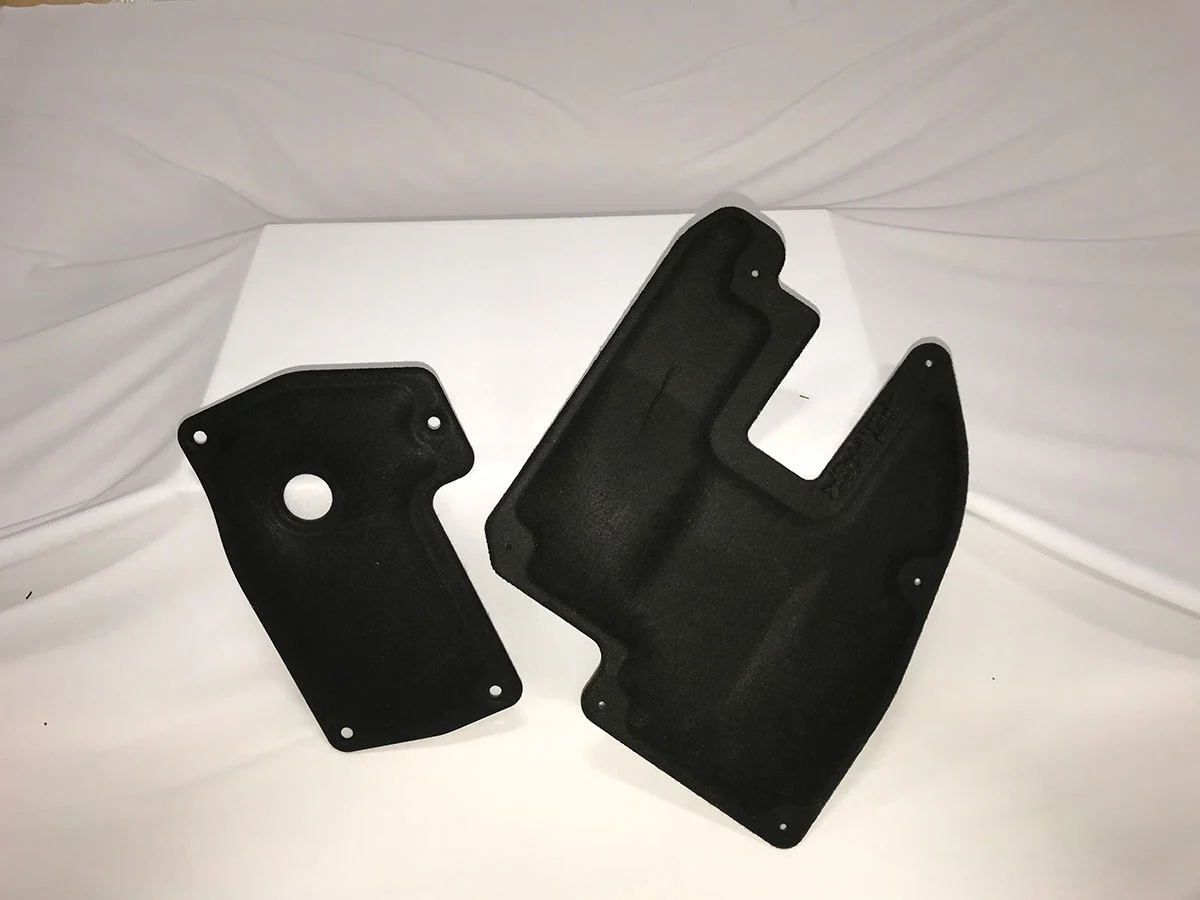
Compression molding excels in producing large, durable parts with simpler geometries.
It’s commonly used for components that require strength and resilience.
- Automotive Parts: Compression molding is widely used to create large, strong automotive components like dashboards, battery trays, and bumpers.
- Electrical Components: This process is ideal for producing insulation and protective components like circuit breakers and electrical boxes.
- Large Panels: Compression molding is well-suited for manufacturing large, flat parts, including roofing tiles and industrial panels.
Injection Molding
Injection molding, with its precision and ability to handle intricate designs, is often chosen for smaller, detailed components that require high-volume production.
- Small Intricate Components: Injection molding is perfect for producing small, precise parts like gears, buttons, and connectors in consumer electronics and appliances.
- Packaging: It’s also commonly used in packaging, producing items like bottle caps, lids, and containers in large quantities.
- Medical Devices: The medical industry relies on injection molding for devices like syringes, diagnostic tools, and implants, which require precision and consistency.
Cost Considerations
When choosing between compression molding and injection molding, understanding the cost dynamics of each process is key to making the right decision for your project.
Compression Molding
Compression molding typically comes with lower upfront tooling costs, making it an economical choice for projects that require low to medium production volumes.
It’s especially suitable when producing large, simple parts where precision isn’t the main concern.
However, per-part costs can be higher due to the slower production cycle and additional post-processing steps, such as trimming excess material (flash).
- Best for low to medium-production runs
- Lower tooling costs
- Higher per-part cost for larger volumes
Injection Molding
Injection molding involves a higher initial investment due to the complexity of the molds and the equipment required.
However, it becomes cost-effective for large production runs, where the per-part cost decreases significantly.
The faster cycle times and higher automation levels help reduce labor costs, and the process produces less waste, which further drives down long-term production costs.
- Higher initial tooling investment
- Cost-efficient for high-volume production
- Lower per-part cost over time
How to Choose the Right Method
Selecting between compression molding and injection molding depends on several critical factors that can affect the efficiency and cost of your production.
Here’s what to consider:
#1. Production Volume
For low to medium-volume production, compression molding offers a more affordable solution with lower tooling costs.
However, if you’re producing large quantities, injection molding is the better option, thanks to its ability to deliver high volumes efficiently and cost-effectively.
#2. Part Complexity
If your project requires intricate parts with fine details and tight tolerances, injection molding is ideal, as it can handle complex geometries with high precision.
For simple, large parts, compression molding works best.
#3. Material Requirements
Compression molding is better suited for thermosets, rubber, and applications needing high strength and durability.
Injection molding is versatile, handling a wide range of thermoplastics, elastomers, and even some composites.
#4. Budget
Consider your initial investment and long-term costs.
If your budget allows for a higher upfront cost but you expect long-term savings through efficient mass production, injection molding is likely the better choice.
For low-budget or short-term projects, compression molding may offer the most flexibility you need.
Carefully evaluating these factors will help you make the most cost-efficient and effective choice for your specific project needs.
Conclusion
Choosing between compression molding and injection molding depends on factors like production volume, part complexity, and budget.
Compression molding is ideal for simpler, lower-volume projects, while injection molding excels in high-volume, intricate designs, offering efficiency and precision.
Ready to get started with your next project?
Contact us today for expert guidance and tailored solutions that meet your production needs!
FAQs Related to Injection Molding vs. Compression Molding
What are the advantages of injection molding over compression molding?
Injection molding allows for more precise and complex shapes, faster production cycles, and automated mass production, making it ideal for high-volume manufacturing. Compression molding, on the other hand, is slower and more suited for simpler parts.
What is the difference between injection molding and molding?
Injection molding involves injecting molten material into a mold cavity, whereas molding is a general term for various methods of shaping materials, including techniques like compression molding and blow molding.
What is the basic difference between compression molding and transfer molding?
In compression molding, material is placed directly into the mold cavity and shaped by applying heat and pressure. Transfer molding involves transferring preheated material into a mold, which allows for more complex shapes but requires higher precision.
What are the disadvantages of compression molding?
Compression molding has slower cycle times, limited design complexity, and less precision compared to injection molding. It also requires manual processes, which can increase labor costs and time.
Is injection moulding cheap or expensive?
Injection molding has high upfront costs due to tooling, but it becomes cost-effective for large production runs because of its speed, precision, and low per-unit cost.
Related Articles
Reaction Injection Molding: Process, Benefits and Uses
Comprehensive Guide to Injection Molding Tooling
ABS Injection Molding: Key Benefits, Process & Uses
The Ultimate Guide to Injection Molding
Medical Injection Molding: Precision in Healthcare
Comprehensive Guide to Metal Injection Molding (MIM)
Parting Line Injection Molding Guide
Sink Marks Prevention in Injection Molding
What is Injection Molding Back Pressure?


