

Automotive injection molding is a crucial manufacturing process that plays a significant role in modern vehicle production.
Simply put, it involves injecting molten plastic into specially designed molds to create various car parts.

This process allows manufacturers to produce high-quality, durable components in large quantities, all while keeping costs down.
In today’s competitive automotive industry, both Original Equipment Manufacturers (OEMs) and aftermarket suppliers rely heavily on injection molding.
Why?
Because it offers a reliable and efficient way to mass-produce parts that are not only strong but also lightweight—essential for improving vehicle fuel efficiency and overall performance.
From bumpers and dashboards to under-the-hood components, automotive injection molding is at the heart of creating the vehicles we drive every day.
History of Injection Molding in the Automotive Industry

Early Days: Metal Parts Dominate
In the early automotive industry, metal was the primary material used, making cars heavier and more expensive to produce.1940s–50s: Introduction of Plastics
Plastics were introduced for decorative elements, marking the first step towards lighter and more affordable vehicles.1970s–80s: Shift to Plastic Parts
Injection molding became the standard for producing key components like dashboards, bumpers, and door panels, replacing many traditional metal parts.2000s: Rise of Structural Plastic Parts
Automakers began using structural plastic components, significantly improving fuel efficiency, reducing production costs, and enhancing vehicle performance.
How Automotive Injection Molding Works
Step 1: Designing the Mold

The process begins with creating a precise CAD model of the part, capturing every intricate detail based on the part’s design requirements.
This model is used to craft a mold, ensuring the final part meets the exact specifications needed for functionality and durability.
Step 2: Injecting Molten Plastic

In this step, molten plastic is injected into the mold at high pressure.
This process fills the mold cavity, ensuring that even the smallest details are accurately formed.
The type of plastic used can vary depending on the part’s requirements, such as its strength or flexibility.
Step 3: Cooling & Ejection

Once the mold is filled, the part is cooled to solidify the plastic. Afterward, the mold opens, and ejectors push the part out.
This step is crucial for maintaining the precision and shape of the part.
The mold can then be reused for large-scale production, making the process highly scalable.
Advantages and Disadvantages of Automotive Injection Molding

Advantages:
- Cost-Effective for Mass Production: Once the mold is created, the per-part production cost drops significantly, making it ideal for large-volume manufacturing.
- High Precision: The process ensures highly accurate and uniform parts, meeting strict automotive standards.
- Material Versatility: A wide range of thermoplastics can be used, providing flexibility for different parts and functions.
- Durability: Injection-molded parts are robust, resistant to wear, and can withstand harsh environments, making them ideal for automotive use.
- Quick Production Cycles: The process is fast, allowing for quick turnaround times in producing parts.
- Complex Geometries: Injection molding can produce parts with intricate shapes and fine details that are difficult to achieve with other methods.
Disadvantages:
- High Initial Tooling Costs: Creating the mold is expensive, which can make it less cost-effective for small production runs.
- Long Lead Time for Mold Creation: Designing and fabricating the mold takes time, delaying the start of mass production.
- Limited to Plastic Materials: While versatile, injection molding is restricted to plastic and rubber materials, limiting its use for metal components.
- Material Waste in Prototyping: While efficient in large runs, injection molding can lead to material waste during the initial prototyping phase.
Key Materials Used in Automotive Injection Molding
1. Acrylonitrile Butadiene Styrene (ABS)

ABS is a popular choice for automotive parts like dashboards and wheel covers.
It combines strength, durability, and a glossy finish, making it ideal for both functional and aesthetic components in vehicles.
Its ability to withstand impact and resist wear over time makes it a reliable material for high-traffic areas in car interiors.
2. Polypropylene (PP)

This versatile polymer is widely used for exterior automotive components like bumpers, battery covers, and even cable insulation.
PP’s resistance to chemicals, water, and UV light makes it particularly suited for parts exposed to harsh outdoor conditions.
Its lightweight nature also helps reduce overall vehicle weight, improving fuel efficiency.
3. Polyurethane (PU)

Known for its flexibility, PU is most commonly used in foam seating, gaskets, and suspension bushings.
Its ability to absorb shocks and dampen vibrations makes it an ideal material for comfort and performance-related components.
Additionally, PU’s durability ensures it holds up well under prolonged stress.
4. Polyvinyl Chloride (PVC)

PVC is valued for its flexibility, flame resistance, and thermal stability.
It is commonly used in interior automotive components like panels and dashboards, where it provides a balance of durability and design flexibility.
PVC is also used in electrical cable sheathing due to its insulating properties.
5. Polyamide (Nylon)

Nylon is known for its excellent wear resistance, making it ideal for use in moving parts like bushes and bearings.
Its ability to withstand friction and high temperatures makes it a reliable choice for under-the-hood components.
Nylon’s rigidity and strength also contribute to its use in many functional automotive parts.
6. Reinforced Composites

For high-strength components like bumpers and body panels, reinforced composites—often made with glass or carbon fibers—are the go-to materials.
These composites provide superior strength and rigidity compared to standard plastics, allowing them to replace metal parts in certain applications, reducing weight without sacrificing performance.
Applications of Automotive Injection Molding
Under-the-Hood Components

Injection molding plays a key role in producing durable, heat-resistant parts for under-the-hood applications.
Components such as cylinder head covers, oil pans, and air filter housings benefit from the high precision and material versatility of injection molding.
These parts need to withstand high temperatures, vibrations, and exposure to fluids, making injection molding an ideal manufacturing process for achieving the necessary durability and performance.
Interior Components

The interior of a vehicle requires a mix of functional and aesthetically pleasing parts.
Injection molding is used to create components like dashboards, glove boxes, door handles, and center consoles.
These parts need to be both durable and capable of maintaining a high-quality finish, which injection molding can achieve through various material and surface finish options.
Exterior Components

Exterior vehicle parts demand both strength and visual appeal, and injection molding provides the flexibility needed for such components.
Examples include bumpers, fenders, light housings, grills, and splash guards.
These parts must be impact-resistant and durable, making injection molding an effective solution for producing lightweight yet strong components that meet safety standards while contributing to vehicle aesthetics.
Types of Injection Molding Processes in Automotive Manufacturing
Thermoplastic Injection Molding

This is the most commonly used injection molding process in automotive manufacturing.
Thermoplastic materials such as ABS, polypropylene (PP), and nylon are melted and injected into molds, allowing them to be reshaped once cooled.
This process is ideal for producing lightweight, durable components like interior panels, bumpers, and engine parts.
The reusability of thermoplastics also makes this process more environmentally friendly.
Elastomeric Injection Molding

Used for making parts from rubber and silicone, elastomeric injection molding is ideal for components that require flexibility and resilience.
This process is commonly used for manufacturing parts like seals, gaskets, and vibration-absorbing elements such as bushings.
Its high resistance to wear and ability to dampen vibrations make it essential for under-the-hood and safety-critical components.
Overmolding & Insert Molding

These advanced techniques allow for multi-material manufacturing.
Overmolding involves molding a second material over an existing molded part to improve functionality or appearance, such as creating soft-touch buttons or grips.
Insert molding incorporates pre-made metal or plastic inserts into the mold before injection, adding strength or functionality.
Both processes are frequently used for creating parts like dashboard controls, electrical housings, and multi-material interior components.
Thermosetting Injection Molding

Thermosetting materials, like epoxy and polyester, are used in this process, which is ideal for parts that require high heat resistance, such as engine components and brake system parts.
Once cured, thermosetting plastics cannot be reshaped, making them perfect for applications where permanent strength and heat durability are critical.
Automotive Injection Molding vs. Metal Stamping
Alternatives to Automotive Injection Molding
3D Printing

3D printing is ideal for creating prototypes or low-volume production parts.
It allows for rapid iterations and design modifications without the need for costly tooling.
This flexibility makes it especially useful for early-stage development or custom automotive parts.
Die Casting

Die casting is a go-to process for manufacturing metal parts, particularly in engine components.
It involves injecting molten metal into a mold, creating strong and heat-resistant parts.
Though typically used for metals like aluminum, it offers excellent dimensional accuracy and surface finish.
CNC Machining
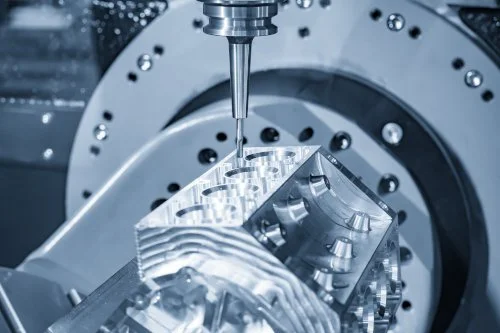
CNC machining excels in producing small production runs or highly complex designs.
This method is best suitesd for creating precision components with tight tolerances, and it’s frequently used in custom automotive parts or low-volume production where injection molding might not be cost-effective.
Challenges in Automotive Injection Molding

High Initial Tooling Costs
While injection molding is cost-effective for mass production, the initial tooling costs can be significant, especially for custom or complex molds.
This upfront investment may be a hurdle for smaller production runs or startups.
Material Constraints
Not all plastics are suitable for high-temperature or high-pressure environments, limiting their use in certain automotive applications.
For example, some materials may degrade under extreme heat, making them unsuitable for engine components or other high-stress areas.
Design Limitations
Complex shapes and intricate designs require careful planning to ensure that molds are capable of producing defect-free parts.
Poorly designed molds can result in issues like warping, sink marks, or incomplete filling, impacting the quality of the final product.
Conclusion

Automotive injection molding plays a crucial role in modern vehicle manufacturing.
Its ability to produce high-quality, durable components at scale, while keeping costs manageable, makes it indispensable for both OEMs and aftermarket parts.
With its versatility in materials and processes, injection molding continues to be a go-to choice for creating everything from interior panels to under-the-hood components.
If you’re looking to streamline your production process while maintaining high standards, automotive injection molding is a smart investment.
Explore this method for your part production needs and benefit from its efficiency, reliability, and design flexibility.
Related Articles
Top Injection Molding Machine Manufacturers
Structural Foam Injection Molding: Benefits and Applications
Liquid Silicone Rubber Injection Molding: A Detailed Guide
Comprehensive Guide to Rubber Injection Molding
Ultimate Guide to EVA Injection Molding
Thermoplastic Elastomer (TPE) Injection Molding Guide
Ultimate Guide to Overmolding: Techniques
10 Common Plastic Resins for Injection Molding
Thermoforming vs Injection Molding: Key Differences
Understanding 2K Injection Molding: Process


 English
 Arabic
 German
 Spanish
 French
 Italian
 Javanese
 Korean
 Portuguese
 Russian
 Hindi
 Chinese
