


Reaction injection molding is a process that is low in pressure and temperature.
It is used to manufacture or make different types of plastic parts.
The RIM process is highly used in various medical, industrial, and automotive industries.
It plays a very important role in high-quality production by giving freedom and flexibility to design by using different kinds of features such as Ribs, curves, and undercuts in a single part.
Further, it allows for the great production of parts at the right ratio.
This article will focus on reaction injection molding, its materials, challenges, factors affecting it, etc.
Follow up till the end.
Understanding Reaction Injection Molding (RIM)
RIM has comparatively fast cycle times and also provides flexibility for design making.
In the automotive industry, RIM makes body panels, kits, spoilers, instrument panels, etc.
It has played a major role in the aerospace industry by making interior and exterior parts such as panels and ducts.
The RIM Process Unveiled

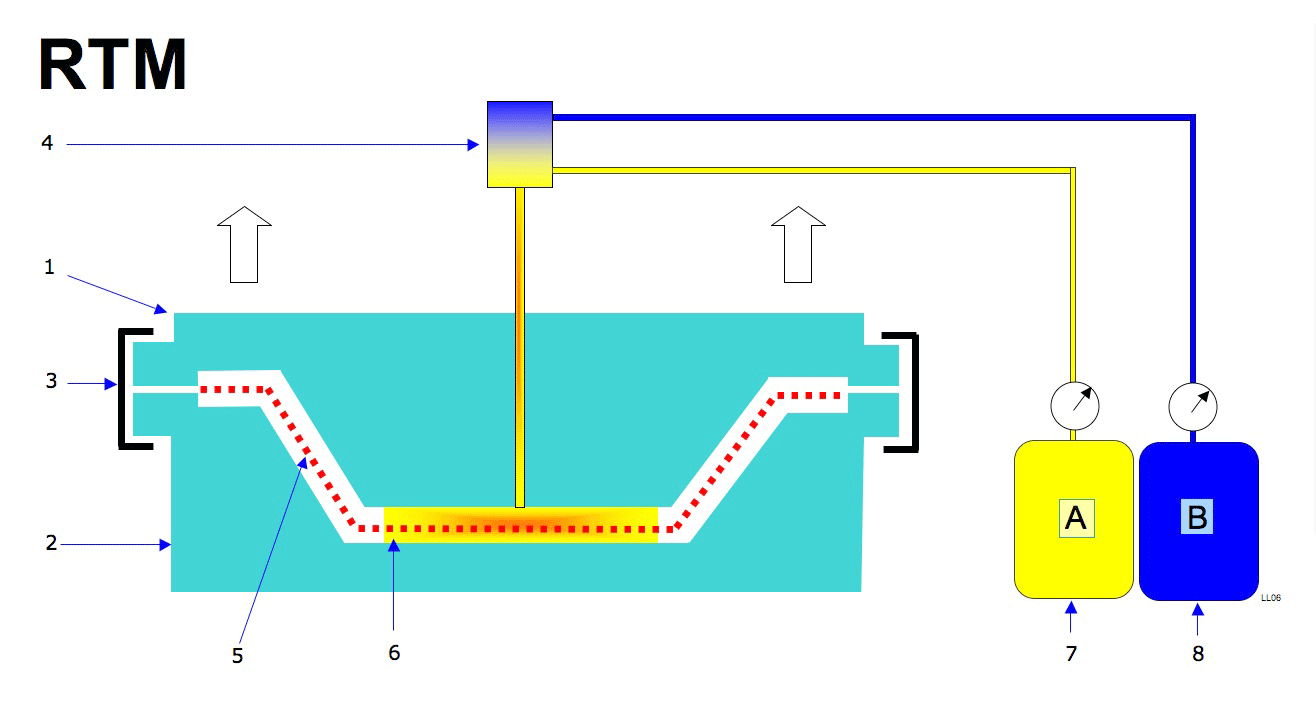
RIM process begins with polymer liquid stored in storage tanks and dispensed by high-pressure industrial pumps.
Further, the polymers recirculate from storage tanks to multi-stream mix heads and back to the storage tank.
This process continues.
Overall, the RIM process uses reactive liquid polymers, typically polyurethanes, to produce strong and durable parts.
Polymers expand and thicken by a variety of chemical reactions.
Once they are inserted into the heat mold, they become hard.
This process gives the overall flexibility in producing large, lightweight, and intricately shaped components.
One can easily customize the parts based on their requirement.
Benefits of Reaction Injection Molding

Reaction Injection Molding offers several distinct advantages that make it a preferred choice for various industries.
Let’s explore these benefits and understand why this process is ideal for complex part manufacturing.
RIM Materials and Applications

RIM has excelled in different fields with its potential and has made really good products. Below are some of the materials used in the RIM process.
- Polyurethane solids and foam
- Elastomeric polyurethanes
- Dicyclopentadiene (DCPD)
- Structural foams
- Rigid foams
- Flexible polyurethane foams
- Polyisocyanate
- Polyol
- Surfactant
- Catalyst
- Blowing agent
- Glass fibers
Apart from the materials used in RIM, there are some really good applications in which it has made its mark.
Not only has it helped various automobile industries but also the healthcare sector. Some of its applications are:
- Electronic Devices
- Packaging
- Bumpers and body panels
- Helmet foam
- Syringes and valves
Uses of Reaction Injection Molding
Reaction Injection Molding (RIM) offers unique advantages for producing complex, durable, and customizable components across various industries.
Let’s explore how different sectors utilize RIM for their specific manufacturing needs.
1. Large, Durable Parts
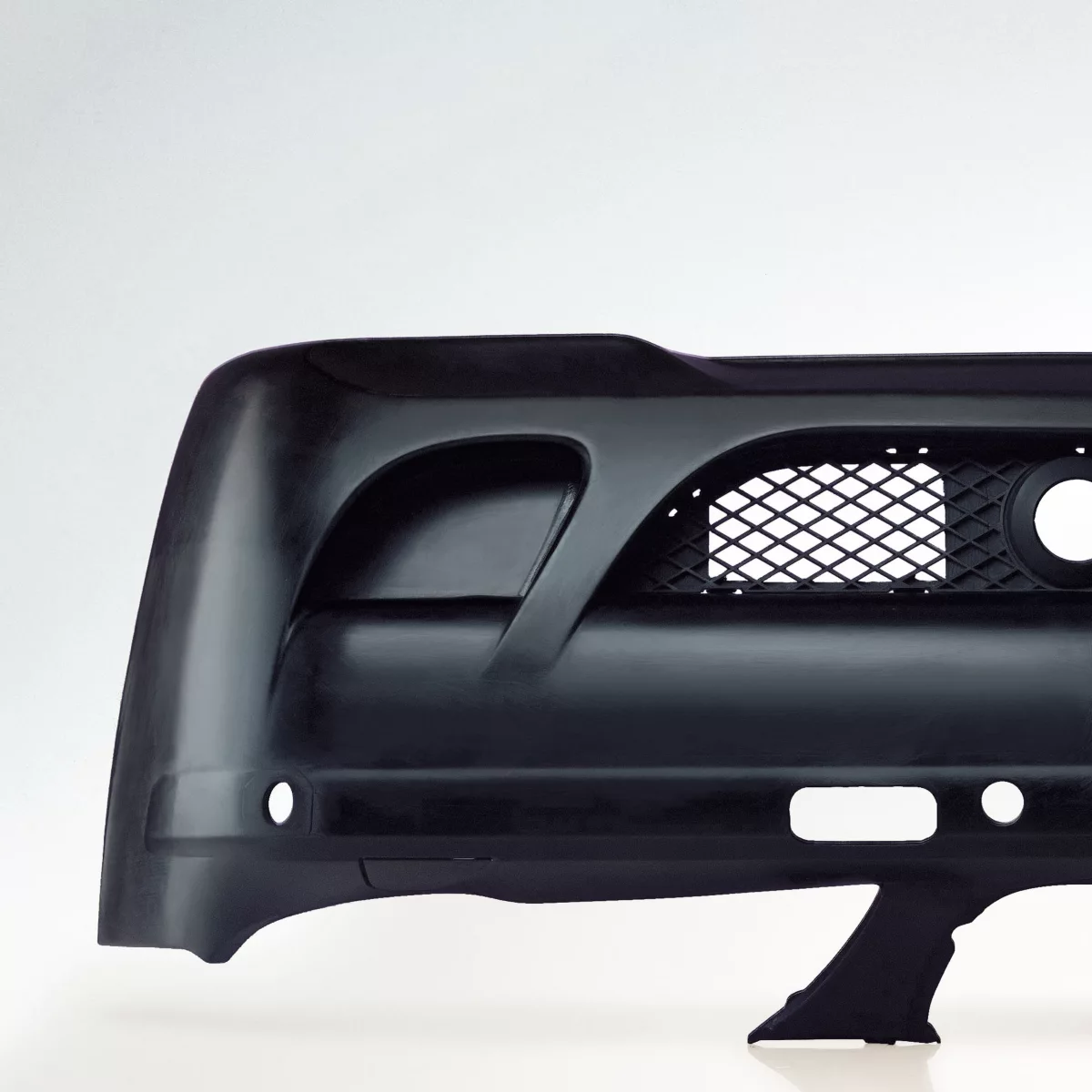
RIM is highly effective for manufacturing large, durable components used in industries like automotive and construction.
These parts, such as automotive bumpers and industrial panels, are designed to withstand harsh conditions due to RIM’s excellent strength-to-weight ratio and durability.
2. Complex Geometries and Designs

RIM allows manufacturers to create intricate parts with complex geometries and varying wall thicknesses, which are difficult to achieve with traditional methods.
This makes it ideal for producing precise equipment casings, protective covers, and other detailed components that require high design flexibility.
3. Low to Medium Volume Production

For low to medium production volumes, RIM is a cost-effective solution, especially for specialized parts in industries like medical devices, electronics, and machinery.
The reduced tooling costs and flexibility make it an economical choice for producing high-quality, smaller-batch runs without compromising on consistency.
4. Customizable Parts
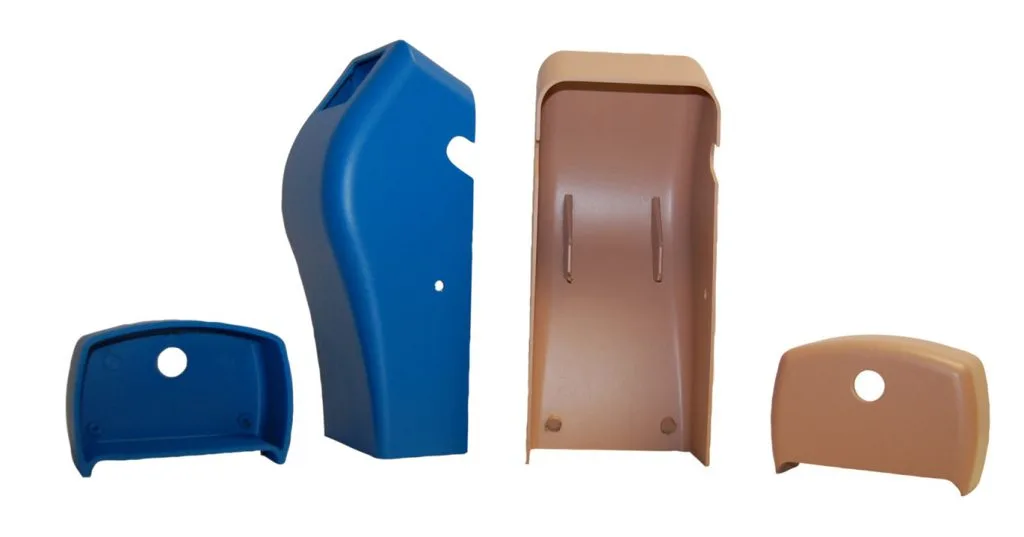
RIM provides extensive customization options, enabling manufacturers to produce parts in various colors, finishes, and textures.
This feature is particularly useful in industries like automotive and consumer products, where aesthetics and branding are critical to product appeal.
Reasons that Make RIM the First Choice
RIM has made its position in the manufacturing industry so far.
But do you know the reason behind it?
Following are some of its benefits that have made RIM the best and first choice:
- Cost-Effectiveness: It has relatively low-cost parts compared to other injection molding production methods.
- Design Freedom: Flexibility in designing the parts according to you is the best part. You don’t have to worry about any other factors.
- Rapid Production: RIM has the ability to do rapid production. Though it’s a low-pressure, low-temperature process, it still has a fast cycle speed, which completes many processes faster than other traditional methods.
- Superior Part Quality: It gives flexibility for design selection, and along with that, it has the ability to produce great quality parts.
Challenges and Considerations
RIM is the best process and has opened ways to produce the best quality parts.
But certain challenges might come your way. These possible challenges are:
- Part Design Verification: To verify the part’s design is challenging due to its customization. This results in mold complexity, longer cycle times, and material wastage.
- Optimization: Sometimes, identifying the features and optimizing accordingly to make it simpler and cost-effective might be challenging. This increases the complexity of mold and also can affect the overall quality.
These are the two main challenges that might come your way. Therefore, be careful of that. Further, let’s have a look at the considerations of RIM:
Tips to Overcome Production Challenges

1. Select the Right Materials: Be very careful while you choose the material for the production of the part.
It will decide all the factors, such as temperature, cooling, pressure, etc. Have a word with an expert to have better knowledge.
2. Use Updated Tools and Techniques: Have a look at the materials you have and then proceed with the tools.
You have to be very particular about the tools you will use for the manufacturing process.
3. Collaborate with Experienced Suppliers: You should deal with those suppliers who are experienced enough to give you better advice and methods to utilize the whole process.
4. Strive for Better Processes: Optimize your product parts with upgraded techniques.
Make sure to focus on parameters such as temperature, durability, etc., to meet the needs of your machine.
Role of Reaction Injection Molding in Sustainability

Reaction injection molding (RIM) has greatly impacted leading manufacturing industries today.
Also plays a very special role in sustainability as well.
Following are some great functions it has performed:
- Minimizes Material Wastage: Since it is customized and is used for a sensible production of parts, it keeps track of the material used. If you carefully use the machine, it will help minimize material wastage.
- Energy Efficient: It has a fast cycle, which takes less time to complete the whole project. It is highly efficient, which helps production go smoothly.
- Durable End Products: It produces durable products that go a long way. Since products have such good features, there’s no scope for wastage. This is a great mark for sustainability.
Conclusion
Reaction injection molding is the trending manufacturing process today in terms of its quality, speed, and various other factors.
It has given a scope of betterment for various products and has made a really good impact as compared to other traditional methods.
To get more knowledge and tips from our expert, visit the website HITOP IND and explore such interesting topics.


 English
 Arabic
 German
 Spanish
 French
 Italian
 Javanese
 Korean
 Portuguese
 Russian
 Hindi
 Chinese
