

Injection molding is one of the most widely used manufacturing processes for creating plastic parts, and at the heart of this process lie the core and cavity.

These two components are the essential building blocks of any mold, shaping the interior and exterior features of the final product.
The core and cavity aren’t just about forming shapes—they determine the accuracy, durability, and appearance of the molded parts.
Their precise design and construction are key to producing high-quality products efficiently, making them indispensable for successful injection molding projects.
What Is Core?
The core is the male part of the injection mold, which is responsible for shaping the internal features of the molded part.
These features may include ribs, bosses, threads, or any other internal contours that define the functionality of the product.
Positioned on the movable side of the mold, the core ensures that intricate internal details are accurately formed during the injection molding process.
What Is Cavity?

The cavity is the female part of the mold, forming the external features of the molded part.
This includes textures, parting lines, and the overall surface finish that contribute to the product’s aesthetic and dimensional precision.
Located on the fixed side of the mold, the cavity plays a crucial role in creating the visible contours and ensuring the molded part meets cosmetic and design requirements.
Key Differences Between Core and Cavity

Quick Overview
Location
- Core: Positioned inside the mold, the core forms the internal features such as holes, ribs, and threads.
- Cavity: Found on the exterior side of the mold, it shapes the external features like texture, contours, and surface details.
Function
- Core: Its primary role is to provide structural integrity and create the internal geometry of the part, ensuring the product performs as intended.
- Cavity: Focused on external aesthetics and delivering a high-quality surface finish, the cavity ensures the product looks polished and meets design specifications.
Pressure and Wear Resistance
- The core typically experiences lower pressure, as its role is to support and shape internal structures.
- The cavity, on the other hand, withstands higher pressure and wear, making it crucial for maintaining precision during repeated molding cycles.
Material Selection

- Cavity: Requires durable materials such as hardened steel to handle the stress and ensure long-lasting performance.
- Core: Often made from softer materials like aluminum, as its role demands less wear resistance but focuses on precise internal detailing.
Importance of Core and Cavity in Injection Molding

The core and cavity are the heart of every injection mold, playing a crucial role in shaping and defining the final product.
Let’s break down why they are indispensable:
Dimensional Accuracy and Tight Tolerances

The core and cavity work together to ensure the precision of the molded part, meeting tight tolerances and guaranteeing consistent results.
This accuracy is essential for products requiring detailed internal and external features.
Influence on Appearance and Structural Integrity
- The cavity defines the external aesthetics, such as surface texture, contours, and overall finish.
- The core ensures the product’s structural integrity, supporting its functionality with precise internal geometries like ribs and threads.
Optimizing Cooling and Ejection Processes
Properly designed cores and cavities:
- Enhance cooling efficiency, reducing cycle times and improving productivity.
- Ensure seamless ejection by allowing the molded part to release cleanly from the mold, avoiding defects or damage.
Enhancing Mold Longevity and Cycle Efficiency

By selecting durable materials and optimizing the design:
- The core and cavity withstand repeated use, extending the mold’s lifespan.
- Efficient designs reduce wear and tear, improving overall cycle efficiency and lowering production costs.
Types of Core and Cavity
Understanding the types of core and cavity is essential to selecting the right configuration for your injection molding project.
Fixed Types

- Single Cavity/Core: Designed for simple parts, this type uses one cavity and core to produce basic shapes. It’s perfect for low-volume production or straightforward designs.
- Multi-Cavity Molds: These molds have multiple cavities and cores, enabling the production of several parts in a single cycle. They boost efficiency and are ideal for high-volume manufacturing.
Interchangeable Types
Replaceable or interchangeable cores and cavities provide flexibility to create different part designs using the same mold base.
This approach is cost-effective for producing varied products without building multiple molds.
Sliding and Collapsible Types

- Sliding Cores and Cavities: These components move during the molding process to form complex internal features like side holes or intricate geometries.
- Collapsible Cores: Commonly used for creating internal threads or undercuts, these cores collapse after molding to allow for easy ejection of the part.
Unscrewing Types
Unscrewing cores and cavities are specifically designed for parts with threaded or rotational features, allowing parts to be unscrewed from the mold during ejection.
This ensures precise threading and smooth removal.
Design Considerations for Core and Cavity
Creating an effective injection mold requires attention to critical design elements that ensure quality, durability, and efficiency.
Draft Angles

Draft angles are essential for easy ejection of molded parts.
By slanting vertical surfaces slightly, they minimize friction and prevent damage to parts during removal.
The angle must account for the part’s material and texture.
Cooling Channels

Proper placement of cooling channels ensures uniform heat dissipation, which reduces cycle times and prevents defects like warping.
Cooling channels must be designed to match the geometry of the core and cavity for efficient thermal management.
Material Selection

Selecting the right material is vital for both durability and performance:
- Cavity Materials: Hardened steel grades like P20, NAK80, and 718 are ideal for handling high pressures and wear resistance.
- Core Materials: Softer materials, such as aluminum alloys, are preferred for better heat conductivity and lighter weight in certain applications.
Wall Thickness

Maintaining uniform wall thickness is key to preventing defects such as warping, sink marks, or uneven cooling.
Variations in thickness can lead to dimensional inaccuracies and compromised part quality.
Factors Influencing Core and Cavity Placement

Proper core and cavity placement is crucial for ensuring high-quality molded parts and optimizing the production process.
Several factors guide this critical decision.
1. Part Geometry
For parts with complex shapes or deep draws, strategic placement of the core is essential.
This helps achieve accurate replication of intricate features while maintaining the structural integrity of the mold.
2. Ejection System

To facilitate smooth removal, the part must remain on the side with ejector pins as it cools.
Poor placement can result in parts sticking to the wrong mold half, causing production delays and defects.
3. Material Properties
The shrinkage rates of different resins influence placement decisions.
Materials with higher shrinkage may require additional support or draft adjustments to ensure consistent part dimensions.
4. Cycle Efficiency
Thicker sections of the molded part tend to retain heat longer.
Placing these areas near cooling channels allows for faster heat dissipation, reducing cycle times and preventing defects like warping.
Manufacturing Processes for Core and Cavity
The creation of cores and cavities involves a series of precise and well-coordinated manufacturing steps to ensure high-quality and functional molds.
1. CNC Machining

CNC machining is a cornerstone of core and cavity production, enabling the creation of precise external and internal features.
It ensures dimensional accuracy and forms the foundation for subsequent processes.
2. EDM (Electrical Discharge Machining)

EDM is essential for crafting intricate details like fine grooves, ribs, and narrow slots.
This process excels where traditional machining methods struggle, allowing for highly detailed mold components.
3. Polishing and Surface Treatment
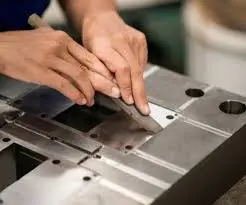
Polishing enhances the mold’s surface, achieving mirror finishes for clear parts or adding textured surfaces for specific aesthetic effects.
Proper surface treatment also extends the mold’s lifespan.
4. Assembly and Trial Molding

Once machined, the core and cavity are assembled into the mold base.
Trial molding is conducted to verify that all components fit correctly and function optimally, ensuring the mold is production-ready.
Common Challenges and Solutions
The manufacturing and use of cores and cavities in injection molding come with several challenges.
Addressing these issues ensures the production of high-quality parts and extends mold life.
Core and Cavity Wear
Frequent molding cycles can lead to wear and tear, reducing precision over time.
Solution: Employ wear-resistant materials like hardened steel and conduct regular maintenance to retain mold accuracy and functionality.
Defects During Ejection

Improper draft angles or misaligned ejector pins can cause parts to stick or deform during ejection.
Solution: Design with sufficient draft angles and ensure correct ejector pin placement to facilitate smooth part release.
Cooling Issues
Uneven cooling can result in warping, sink marks, or other defects in the final product.
Solution: Optimize the cooling channel layout to ensure uniform heat dissipation, enhancing part quality and reducing cycle time.
Best Practices for Core and Cavity Design

Achieving efficient and durable molds requires careful planning and adherence to best practices.
Here’s how to optimize your core and cavity design:
Utilize CAD Software for Accurate Simulations
Tools like Moldflow and SolidWorks provide insights into material flow, shrinkage, and cooling.
These simulations help ensure optimal placement and design of cores and cavities.
Include Features Like Ribs and Bosses for Strength

Structural reinforcements such as ribs and bosses improve part strength and reduce the likelihood of warping.
These features also help distribute material evenly during molding.
Use Uniform Wall Thickness to Avoid Defects
Maintaining consistent wall thickness prevents issues like sink marks, voids, or warping, ensuring the final part meets aesthetic and structural requirements.
Regularly Inspect and Maintain Molds
Frequent use can cause wear, reducing mold precision.
Routine inspections and maintenance extend the mold’s lifespan and ensure consistent quality in production.
FAQs About Core and Cavity
Conclusion

Understanding the core and cavity is essential for producing high-quality injection-molded parts.
Their precise design impacts dimensional accuracy, appearance, and overall functionality.
By optimizing these mold components, manufacturers can achieve efficient production and superior results.
If you’re looking for reliable injection molding services, we’re here to help!
Contact us today to discuss your project needs and receive a custom solution tailored to your goals.


 English
 Arabic
 German
 Spanish
 French
 Italian
 Javanese
 Korean
 Portuguese
 Russian
 Hindi
 Chinese
