

CNC Turning is a critical subtractive machining process known for crafting precise cylindrical components by removing material from a rotating workpiece.

This method is renowned for its accuracy and efficiency, making it essential in industries such as automotive, aerospace, and electronics, where reliable and repeatable results are paramount.
What is CNC Turning?

CNC Turning is a machining process that shapes materials by rotating a workpiece while a stationary cutting tool removes material to form the desired shape.
Controlled by Computer Numerical Control (CNC), this process ensures precision by following pre-set programming instructions.
With CNC, turning machines can produce various shapes, including cylinders, cones, and disks, with a high degree of accuracy and consistency, which is ideal for industries requiring exact specifications and repeatability.
How Does CNC Turning Work?

Let’s explore the core elements that bring CNC turning to life, from precise rotations to programmed movements that shape each part with accuracy.
- Spindle & Rotation
In CNC turning, the spindle holds and rotates the workpiece at precise speeds, enabling consistent and stable contact with the cutting tool.
This rotation is key to achieving smooth and even cuts as the tool shapes the material.
- Cutting Tool Movement
As the workpiece spins, the cutting tool moves linearly along its surface, accurately removing material to form the desired shape.
This precise movement ensures tight tolerances and a refined finish, which is essential for high-quality parts.
- Toolpath Programming
Guided by CNC programming, tool movements are based on CAD models translated into toolpath instructions through CAM software.
These instructions control path, speed, and depth, allowing for the creation of complex shapes with high consistency and precision.
Key Components of a CNC Turning Machine
CNC turning machines are engineered with essential components that work together to deliver precision and efficiency in machining.
#1. CNC Control Panel

The control panel acts as the machine’s brain, directing all movements and settings based on pre-programmed instructions.
It manages the cutting tool’s path, speed, and depth to ensure each cut is precise.
Operators can also adjust settings through the control panel for optimal performance.
#2. Spindle & Chuck
The spindle powers the rotation of the workpiece while the chuck securely holds it in place.
Together, they provide the stability needed for high-speed, accurate cuts, ensuring that the material remains firmly positioned throughout the machining process.
#3. Tool Turret
The tool turret is a versatile rotating unit that holds multiple tools for different operations.
It quickly switches tools based on programmed commands, enabling the machine to complete various tasks in a single setup, improving efficiency and production speed.
#4. Lathe Bed & Carriage
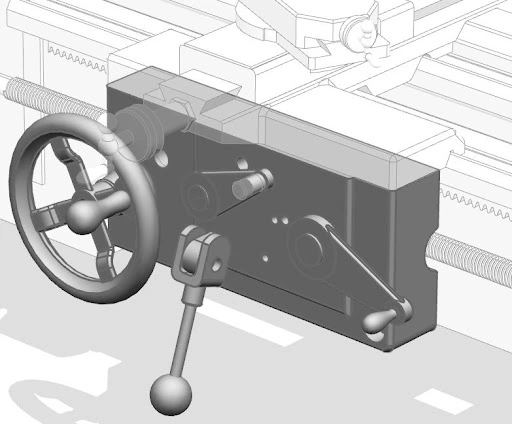
The lathe bed forms the machine’s stable foundation, aligning all components for precision.
The carriage moves along the bed, guiding the cutting tool toward the workpiece with exact linear paths, ensuring high-quality, accurate machining.
Types of CNC Turning Operations
CNC turning isn’t just about shaping material; it’s a versatile process that can create a variety of features and finishes on a part.
Each operation plays a specific role in achieving the desired shape and functionality.
Let’s dive into some of the core turning operations and what they’re best suited for.
Turning

Turning is the fundamental operation in CNC turning.
It involves removing material from the outer diameter of the workpiece to create a cylindrical shape.
As the workpiece rotates, the cutting tool shapes its exterior, perfect for producing shafts, rods, and other round parts with smooth, even surfaces.
Facing
Facing is all about creating a flat surface at the end of the workpiece.
The cutting tool moves perpendicular to the axis of rotation, trimming the end and ensuring a clean, flat finish.
This operation is often used as the first step to prepare the end of a part or as a finishing touch for smooth, polished surfaces.
Boring & Drilling
Drilling and boring are used to create and refine holes.
Drilling is the initial step for making a hole in the material, while boring enlarges or refines pre-existing holes for precise diameters.
These operations are critical when creating features for assembly, like bolt holes or spaces for bearings.
Threading
Threading is essential for adding functional elements to a part, such as screw threads.
During threading, the tool cuts grooves into the workpiece’s outer or inner surfaces to create threads that can accommodate bolts or fasteners.
This operation is commonly used in parts that need to fit together securely, ensuring easy assembly and reliability.
Knurling
Knurling is the process of creating textured patterns on the surface of a part.
These patterns, often in diamond or straight-line forms, provide extra grip, making the part easier to handle.
Knurling is frequently applied to tool handles, knobs, or fasteners to improve usability and aesthetics.
Parting & Grooving
Parting and grooving operations involve cutting narrow, precise features on the workpiece.
Grooving adds indented lines or channels, which can be used for features like O-ring seats or decorative accents.
Parting is used to cut off or separate the finished part from the remaining material stock, ensuring a clean detachment and readying the part for further processing or use.
CNC Turning Machines: Types & Capabilities
CNC turning machines come in a range of types, each tailored to specific needs and complexities.
Choosing the right machine type depends on the material, part geometry, and production requirements.
Let’s break down the primary types and what makes them unique.
Horizontal vs. Vertical Turning Centers

Horizontal and vertical turning centers differ primarily in how the workpiece is oriented:
- Horizontal Turning Centers are the most common and versatile. With the workpiece held horizontally, these machines are ideal for general-purpose turning, providing efficient material removal for parts of various shapes and sizes. They handle a broad range of applications and are known for their stability and ease of use.
- Vertical Turning Centers hold the workpiece vertically, which is especially useful for large, heavy parts, as the vertical orientation allows gravity to stabilize the workpiece. This makes vertical turning centers ideal for oversized components like large gears or heavy-duty machinery parts, ensuring precise cutting without excess strain on the machine.
CNC Lathes vs. CNC Turning Centers
While both CNC lathes and CNC turning centers perform turning operations, they differ in their capabilities:
- CNC Lathes are generally simpler, focusing solely on turning functions. They’re ideal for creating cylindrical shapes and are often used for straightforward, high-precision parts.
- CNC Turning Centers go a step further, often incorporating additional functionalities like milling, drilling, and tapping. This multi-functionality makes them more versatile and capable of handling complex parts that require multiple operations without needing to move the part to a different machine. Turning centers are perfect for producing parts with diverse features in an all-in-one setup.
Axis Configurations (3-Axis, 4-Axis, etc.)

The number of axis on a CNC turning machine directly affects its ability to handle complex geometries:
- 3-Axis Machines offer basic X, Y, and Z movements, ideal for parts with straightforward geometries. They work well for components that require simple cutting, facing, and drilling.
- 4-Axis Machines add rotational movement (usually around the X-axis), allowing the workpiece or tool to rotate, which is great for parts that need angled cuts or multi-sided machining. This configuration offers more flexibility and can reduce the need for part repositioning.
- 5-Axis Machines provide the highest level of complexity, adding two rotational axes (such as A and B) to enable nearly any angle for intricate parts. These machines are essential for high-precision parts in aerospace, automotive, and medical industries, where intricate details and complex angles are crucial.
Choosing the Right Material for CNC Turning

Selecting the right material is essential for achieving the desired results in CNC turning.
Different materials offer unique properties that affect everything from tooling requirements to production speed and final part quality.
Here’s a look at some of the most common materials used in CNC turning and how their properties impact the machining process.
Common Materials Used in CNC Turning
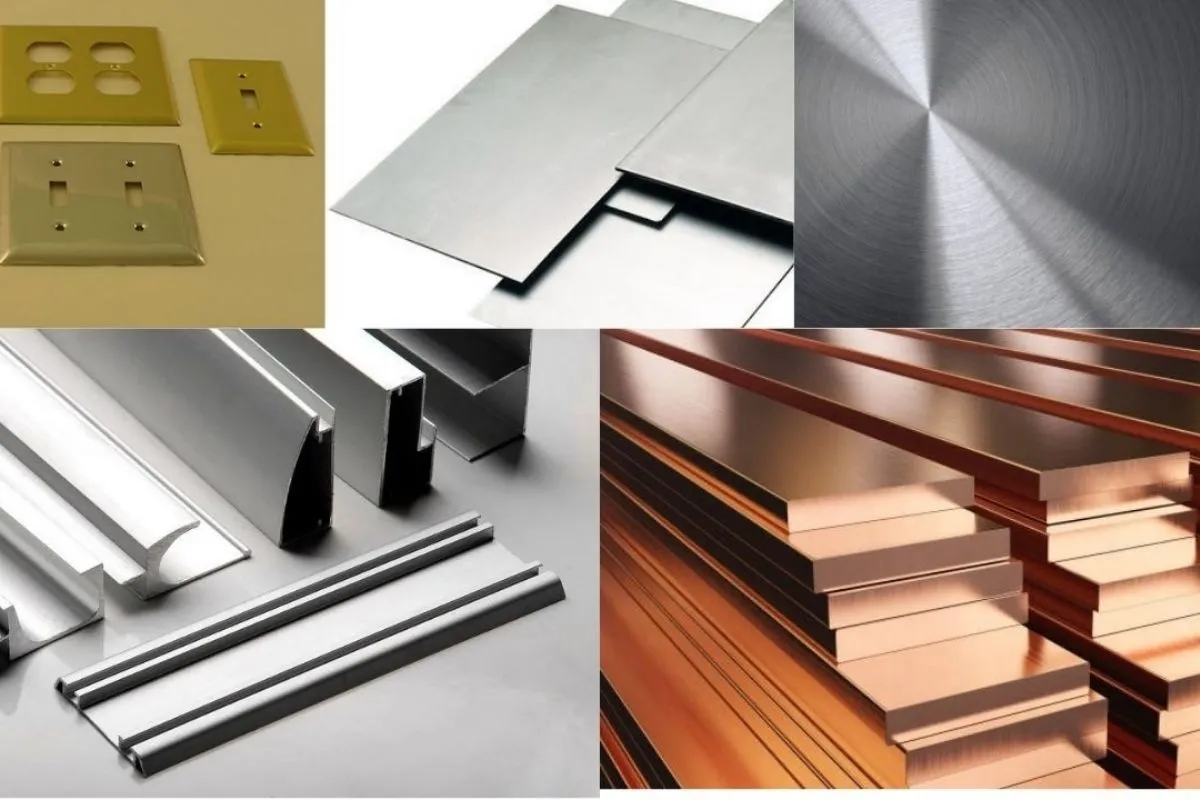
Each material brings its own advantages, making it suitable for specific applications:
- Aluminum: Known for its lightweight and high machinability, aluminum is easy to work with and allows for fast production speeds. It’s widely used in the automotive, aerospace, and electronics industries.
- Steel: Steel offers strength and durability, making it ideal for heavy-duty applications. However, it requires more robust tooling due to its hardness, and machining speeds may be slower to avoid excess wear on cutting tools.
- Brass: Brass has excellent machinability and a low friction coefficient, and it is often used in electrical and plumbing applications. Its properties allow for faster cutting speeds, making it an efficient choice for high-volume production.
- Plastics: Common plastics like ABS, Nylon, and PEEK are used for lightweight, corrosion-resistant parts. These materials are easy to machine but require lower cutting speeds to prevent melting or warping from heat.
Impact of Material Properties on Tooling and Production Speed
The properties of each material—such as hardness, machinability, and thermal conductivity—play a significant role in CNC turning:
- Hardness: Harder materials, like certain steels, can lead to more wear on tools, requiring specialized tooling or coatings. Slower production speeds are necessary to maintain accuracy and prolong tool life.
- Machinability: Materials with high machinabilities, like aluminum and brass, allow for quicker production speeds and less tool wear, making them ideal for large-batch productions. Conversely, materials with lower machinability may require slower cutting speeds and more frequent tool changes.
- Thermal Properties: Materials that conduct heat well, like brass, help dissipate heat away from the cutting tool, reducing the risk of tool damage. Plastics and certain metals, however, can heat up quickly, so careful adjustments to speed and cooling are necessary to maintain part quality.
Choosing the right material not only affects the efficiency of the CNC turning process but also ensures that the finished product meets performance requirements in its intended application.
Benefits of CNC Turning

CNC turning offers a range of benefits that make it ideal for producing high-quality, consistent parts across various industries. Here’s a quick look at some of the main advantages:
- High Precision & Consistency: CNC turning machines operate with computer-controlled precision, ensuring each part meets exact specifications with minimal variation. This precision is especially valuable in industries like aerospace and medical, where even minor deviations can be critical.
- Efficiency & Speed: With automated operation, CNC turning enables high production speeds, making it a cost-effective choice for large volume orders. The process is streamlined from start to finish, reducing the time spent on setup, adjustments, and changeovers.
- Versatility in Shape: CNC turning excels in producing various cylindrical shapes, from simple shafts to complex, custom designs. With the ability to handle diverse part geometries, CNC turning supports a wide range of applications across multiple industries.
- Safety: One of the key benefits of CNC turning is its safety. Automated and enclosed machine setups minimize the need for manual intervention, reducing the risk of operator injuries and enhancing overall workplace safety.
When to Use CNC Turning: Ideal Applications

CNC turning is the go-to method for parts with rotational symmetry and cylindrical shapes.
Its precision and efficiency make it perfect for certain types of applications.
Prototypes and Short-Run Volumes
CNC turning is well-suited for prototype development and low-to-medium production volumes.
Its speed and accuracy allow you to quickly refine and produce designs, making it an efficient option for testing and development phases.
Parts with Rotational Symmetry
If your part has a symmetrical shape around a central axis, CNC turning is often the best choice.
Components like shafts, cylindrical rods, and other round parts benefit from the precision turning offers, ensuring a consistent finish on every piece.
Specific Examples
CNC turning is frequently used to create:
- Shafts – Ideal for motor shafts, axles, and spindles that need consistent diameter and smooth finishes.
- Gears – Perfect for precision-cut gears that require accurate dimensions for effective engagement.
- Fasteners – Bolts, nuts, and screws are quickly produced in large volumes with CNC turning, ensuring precise threads and consistent sizing.
Factors to Consider When Using CNC Turning

Choosing CNC turning for your project requires an understanding of how it aligns with specific production and design needs.
Here are some key factors to consider.
- Volume of Production: CNC turning is ideal for low to medium production volumes. For prototype development or smaller batches, turning offers a quick and efficient way to produce precise parts without the extensive setup costs of other methods. For larger production runs, though, other methods like casting or molding may become more cost-effective.
- Tolerance & Finish Requirements: When high precision and a smooth finish are required, CNC turning is a strong choice. Its accuracy is well-suited to parts that demand tight tolerances—typically within ±0.001 inches—and consistent surface finishes. For critical components like gears and fasteners, CNC turning ensures every piece meets exact specifications.
- Size Limitations: While CNC turning is versatile, there are size constraints to keep in mind. Extremely small or delicate parts may require specialized machines to maintain accuracy, while very large parts may exceed the capacity of standard turning centers. In cases with extreme size requirements, exploring other machining methods might be necessary.
Alternative Methods to CNC Turning
While CNC turning is versatile and precise, certain projects may call for other manufacturing techniques depending on the complexity, material, and production volume requirements.
CNC Milling

For parts with complex geometries or intricate features, CNC milling is often the better choice.
Unlike turning, which is best suited for cylindrical or symmetrical parts, milling uses a rotating cutting tool to shape the workpiece, making it ideal for complex, multi-angled designs.
Injection Molding

Injection molding is optimal for high-volume production of plastic parts.
While setup costs can be high, the per-unit cost decreases significantly for large production runs.
Injection molding is well-suited for intricate shapes and parts that need to be produced at scale.
Die Casting
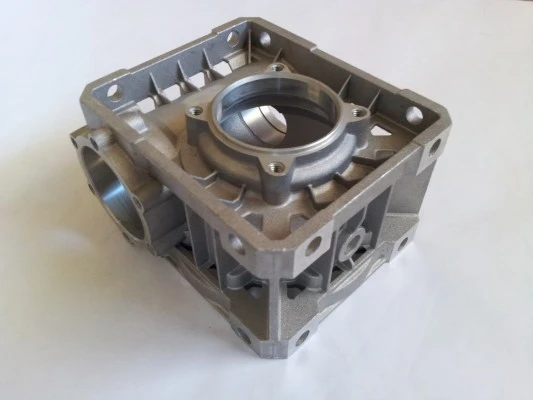
Die casting is an efficient choice for high-volume production of metal parts with tight tolerances.
This process involves injecting molten metal into a mold, allowing for rapid production of durable parts.
It’s ideal for components that need precision and a smooth surface finish.
3D Printing

When prototyping complex or intricate shapes, 3D printing offers flexibility and speed.
While not as cost-effective for large production runs, it’s excellent for producing test parts or low-volume custom pieces with unique geometries that might be challenging for traditional machining.
Best Practices for CNC Turning

Implementing best practices can significantly enhance the quality, efficiency, and longevity of CNC turning processes.
Here’s a quick look at some essential tips to ensure optimal results.
- Optimizing Cutting Speeds and Feed Rates
Adjusting the cutting speed and feed rate is crucial for achieving the desired surface finish and extending tool life.
Lower speeds and higher feed rates are often used for rough cuts, while higher speeds and lower feed rates are ideal for finishing.
Fine-tuning these settings for each material and part specification helps avoid excessive tool wear and maintains quality.
- Tool Material Selection
Choosing the right tool material is essential for efficient cutting and extended tool life.
High-speed steel and carbide are popular choices, but each material brings unique benefits.
Harder materials, like stainless steel, require tougher tooling, such as carbide, to handle the machining load without chipping or wear.
- Regular Maintenance
Routine maintenance is key to keeping CNC turning machines running smoothly.
Cleaning, lubrication, and regular inspections help ensure accuracy, minimize unexpected downtime, and prolong the lifespan of the machine.
Simple preventive measures like these go a long way in maintaining production quality and efficiency over time.
FAQs Related to CNC Turning
Conclusion

CNC Turning is invaluable for manufacturing precision cylindrical parts, offering high accuracy, efficiency, and flexibility across various applications.
With automated precision and consistent quality, it’s a top choice for parts requiring rotational symmetry.
Consider your project’s needs—if precision, efficiency, and consistent results are priorities, CNC turning may be the perfect solution.
Reach out to explore how CNC turning can elevate your manufacturing process.
Related Articles
- Ultimate Guide to Non-Ferrous Metals and Uses
- 3D Printing vs CNC Machining: Which Method is Best?
- Brass vs Bronze vs Copper: Key Differences and Uses
- Comprehensive Guide to Metal Strength and Chart
- Aluminum Extrusion Process: Techniques, Benefits, and Applications
- Types of Machining Processes: Full Guide
- Types of Aluminum Alloys: Properties and Industry Uses
- Comprehensive Guide to Bead Blasting Finishes
- Comprehensive Guide to Metal Strength and Chart


 English
 Arabic
 German
 Spanish
 French
 Italian
 Javanese
 Korean
 Portuguese
 Russian
 Hindi
 Chinese
