

Injection molding and 3D printing are the sturdy foundations of the manufacturing sector. A conventional method that effectively creates large quantities of identical plastic parts is injection molding. However, its strength is in mass production; the upfront cost of making the molds can be prohibitive for smaller runs.
Rapid prototyping, however, is an area in which 3D printing shines. Furthermore, it is excellent at producing complex objects in small quantities. But a fresh wave of creativity is bringing these two technologies closer together.
This article explores the fascinating field of producing injection molds via 3D printing. We will also examine the methods involved, the advantages in terms of cost savings, and the applications that are now feasible.
Understanding the Technologies: 3D Printing and Injection Molding
Though they have different strengths, 3D printing and injection molding are two effective methods for producing tangible goods.
Because it can produce complex designs quickly and iterate on them quickly, 3D printing excels at prototyping. You can use this process for building things layer by layer using a digital blueprint. This is why we consider 3D printing as the basis for additive manufacturing.
When compared to injection molding, 3D printed parts frequently have slower production rates and different material qualities.
For high-volume manufacturing, however, injection molding is the preferred technique. To produce identical parts in large quantities you need to molten plastic is injected into a mold.
The final pieces have accurate dimensions and consistent material quality. The disadvantage of injection molding is that it is not as good for low-volume production or prototyping. This is because of the initial cost associated with making the metal molds.
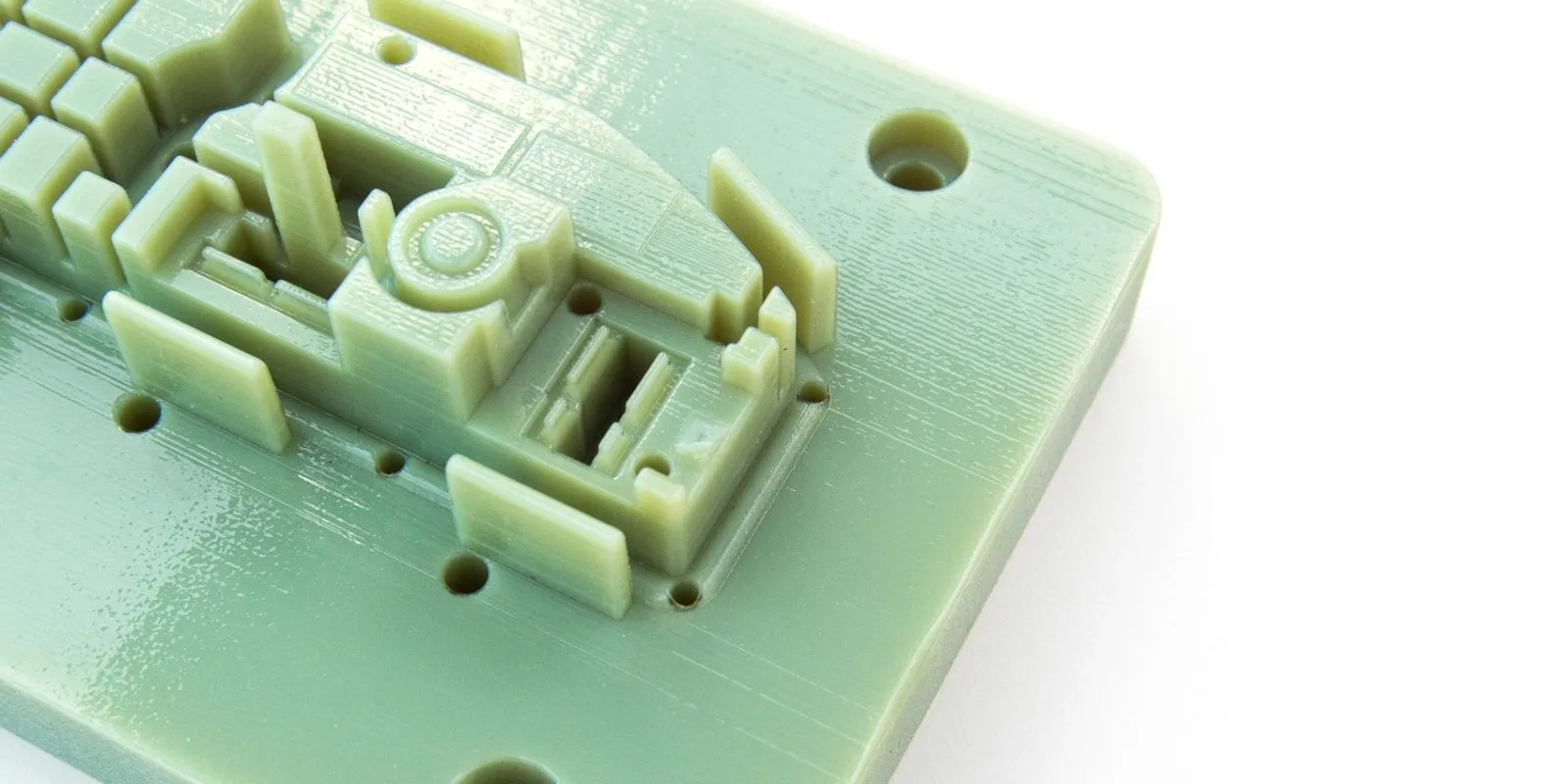
It’s interesting to note that advances in 3D printing technology are merging these two procedures. It is possible to 3D print highly accurate mold inserts using methods such as Stereolithography (SLA.).
This integration can be carried out from strong resins that can resist the pressure and heat of injection molding. The integration makes it possible to produce low-volume batches more quickly and affordably. This actually facilitates a more seamless transition from prototyping to mass production.
Techniques for Using 3D Printing in Injection Molding
Till now, we have understood the synergy between 3D printing and injection molding. Moving on, let’s explore the techniques used to integrate these. These methods are tabulated below.
Direct Tooling: One-Step to Production Indirect Tooling: Leveraging 3D Printing for Traditional Methods Hybrid Approaches
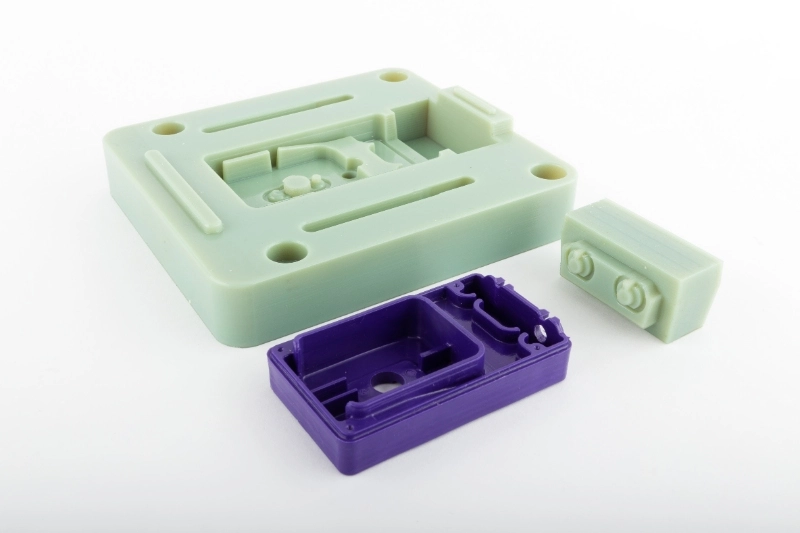
This method utilizes 3D printing technology to create the entire mold insert directly. Techniques like Stereolithography (SLA) and Digital Light Processing (DLP) fall under this category.
They offer high resolution and accuracy, allowing for the creation of complex geometries.
These 3D-printed molds are ideal for low-volume production runs. This is due to limitations in material strength and heat resistance compared to traditional steel molds. Here, 3D printing acts as the first step. A sacrificial 3D-printed mold pattern is created, typically using a more affordable method like Fused Deposition Modeling (FDM).
This pattern is then used in traditional methods like silicone casting or investment casting.
Ultimately, it enables you to create a more sturdy metal mold for high-volume production. This approach offers a balance between cost and production volume In some cases, manufacturers adopt a hybrid approach. For instance, a complex core or cavity insert might be 3D printed for its intricate details.
On the other hand, the outer mold body is machined from metal for added strength and durability.
This strategy allows for the benefits of both technologies to be harnessed for projects with specific requirements.
Choosing the Right Technique
The selection of technique depends on several factors. Direct tooling offers you the fastest turnaround. It is also most cost-effective for low volumes.
Indirect tooling is a good middle ground. This is because it balances cost with the potential for higher products on runs using traditional metal molds.
Hybrid approaches provide flexibility but can be more complex to execute. Ultimately, you’ll have to take everything into account when making the right decision.
Advantages of Using 3D Printing for Injection Molding
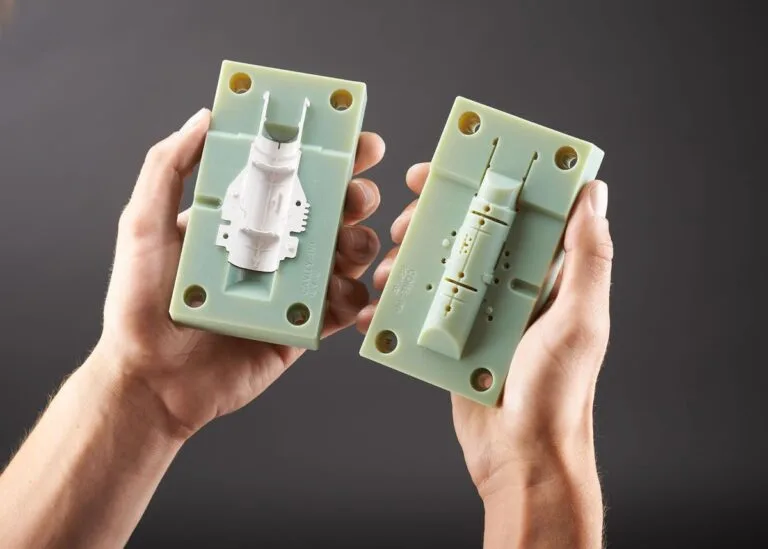
By integrating 3D printing with injection molding, you can access a range of advantages. These benefits streamline production and enhance possibilities.
Prototyping on Fast Forward
The iterative nature of product development is greatly accelerated with 3D-printed molds. Gone are the days of waiting weeks for traditional mold creation. You can now quickly create functional prototypes for testing and feedback. This ultimately leads to faster design refinement and reduced time-to-market.
Cost-Reduction
Injection molding traditionally excels at producing simple shapes in high volume. But 3D printing injects new possibilities.
Complex geometries that might be expensive or even impossible to create with traditional methods become achievable with 3D-printed molds. This opens doors for innovative product design without exorbitant upfront costs.
Reduced Lead Times
The entire production process gets a time warp with 3D-printed molds. The elimination of lengthy metal mold machining significantly reduces lead times.
This actually helps from concept to production. The integration allows you to respond quickly to market demands and capitalize on fleeting trends.
Customization
The ability to personalize products is a growing market force. 3D-printed molds enable you to create low-volume batches with variations.
This way, you can cater to specific customer needs by offering limited-edition products. The ability to customize opens doors for mass customization without sacrificing the efficiency of injection molding.
Minimizing Waste
Traditional mold-making often generates significant metal scrap. 3D printing is undoubtedly a more sustainable solution.
Material usage is optimized, with only the necessary material being deposited layer by layer. This reduces waste and contributes to a more environmentally friendly manufacturing process.
Applications of 3D Printing in Injection Molding
This symbiotic relationship between 3D printing and injection molding gives you access to exciting possibilities across various industries.

Automotive Industry
The fast-paced automotive industry has always survived on innovation. 3D-printed injection molds are a game-changers. They enable rapid prototyping of car parts and components.
From detailed dashboards to complex aerodynamic elements, these molds allow carmakers to test and refine designs. They can do it quickly before committing to high-volume production using traditional metal molds.
Additionally, 3D printing facilitates low-volume production of specialized parts for customized or limited-edition vehicles.
Medical Device Manufacturing
The medical device industry is constantly evolving to meet the needs of individual patients. 3D-printed injection molds empower manufacturers to create custom medical components to suit their needs. These can be prosthetics, implants, and other medical devices tailored to a patient’s specific anatomy.
This level of personalization can significantly improve patient outcomes and quality of life. Additionally, prototypes of new medical devices can be produced quickly and efficiently. This will considerably accelerate the development and testing process.
Consumer Goods
The consumer goods market thrives on innovation and eye-catching designs. 3D printing enables you to create unique and detailed designs for a vast range of products, from household appliances to electronics.
Using 3D-printed injection molds, you’ll be able to produce low-volume batches of these products. These can be used for testing market response before scaling up production with traditional methods.
Furthermore, the ability to personalize products with names, logos, or custom features becomes achievable. You get the ability to cater to a growing consumer demand for individuality.
The Aerospace Industry: Taking Flight with Lightweight Solutions
The aerospace industry prioritizes both performance and weight reduction. 3D-printed injection molds give you the ability to create complex, lightweight components for aircraft and spacecraft.
These components can be made from advanced materials that offer superior strength-to-weight ratios. This will ultimately contribute to improved fuel efficiency and overall performance.
Additionally, 3D printing allows for the production of low-volume, custom parts for specific aerospace applications.
Parting Thoughts
In conclusion, 3D printing offers a revolutionary way to create injection mold inserts. This eventually opens doors for low-volume production, rapid prototyping, and cost reduction.
By combining these technologies, you can bring innovative products to market faster. This also caters to specific customer needs and minimizes waste.
Hitop Industries is a leading injection molding and mold-making company. They are aware of all the latest advancements in manufacturing technology.
If you’re looking to leverage the benefits of 3D-printed injection molds, Hitop Industries can help. They’ll help you select the right technique and materials for your project.
Contact Hitop Industries today to discuss your requirements. Along with that, they give you the opportunity to claim efficient and high-tech mold-making and Injection Molding services.
FAQs Related to 3D Printing for Injection Molding
1. Can you 3D print injection molding?
Yes, you can 3D print injection molds, but the molds are usually used for short production runs or prototype development due to the limitations in material strength and thermal properties of 3D printed parts compared to traditional metal molds.
2. Is 3D printing as strong as injection molding?
No, 3D printed parts are generally not as strong as injection molded parts. Injection molding allows for better material properties and structural integrity, whereas 3D printing can result in weaker parts due to layer adhesion and limited material choices.
3. Can PLA be used for injection molding?
Yes, PLA can be used for injection molding. It is a biodegradable thermoplastic that is easy to work with and commonly used for prototyping and small-scale production.
4. Can you use a 3D printer to make a mold?
Yes, you can use a 3D printer to make a mold. 3D printed molds are often used for prototype injection molding or low-volume production, allowing for rapid testing and iteration of designs.
5. What is the difference between 3D printing and injection molding?
The main difference between 3D printing and injection molding is the manufacturing process. 3D printing is an additive process where objects are built layer by layer, while injection molding is a subtractive process where molten material is injected into a mold to form the final part. Injection molding is better for high-volume production, while 3D printing is more suited for prototyping and low-volume runs.
Related Articles
- Medical Injection Molding: Precision in Healthcare
- Liquid Silicone Rubber Injection Molding: A Detailed Guide
- Mastering Injection Molding Tolerances: Key Insights
- Reaction Injection Molding: Process, Benefits and Uses
- Injection Molding Defects and Their Solutions
- Aluminum Injection Molding: Cost, Benefits, and Design
- ABS Injection Molding: Key Benefits, Process
- Ultimate Guide to HDPE Injection Molding
- 10 Common Plastic Resins for Injection Molding
- Injection Molding vs. Compression Molding


 English
 Arabic
 German
 Spanish
 French
 Italian
 Javanese
 Korean
 Portuguese
 Russian
 Hindi
 Chinese
